Crypto
20 Sep 2026
Read 12 min
Trump AI regulation plan 2026: How to Read the New Rules *
Trump AI regulation plan 2026 explains new oversight and what businesses must do to stay compliant.
President Donald Trump says he will form an “AI Force” and name an AI czar, but he will not slow development. The Trump AI regulation plan 2026 signals light-touch oversight, reliance on existing laws, and a focus on US leadership. Here’s what it means for companies, investors, and the broader AI race.
The White House sent a clear message: build fast, but with guardrails that do not halt progress. Trump said the government will “watch over” AI rather than pause it. He framed calls to slow the frontier as political attacks, and argued current criminal laws can handle bad behavior from AI systems and their users. He also promised an AI “Czar” and a new “AI Force,” though details are still scarce.
Light-touch oversight with industry growth as the top priority
Enforcement through current laws over new heavy regulations
Centralized White House attention via an “AI Czar”
In short, the Trump AI regulation plan 2026 favors speed, market competition, and national advantage, while promising government eyes on safety without formal brakes.
Slowdown camp: pause frontier scale-ups until safety checks improve, and consider a federal role in setting standards and guardrails
Administration stance: keep scaling and innovating, rely on current laws and targeted oversight rather than broad regulatory brakes
Incident response: coordinate across agencies when AI tools cause or enable harm
Threat monitoring: track risks like model exfiltration, agent escape, or critical infrastructure misuse
Standards alignment: promote voluntary safety benchmarks, evaluations, and red-teaming
Data-sharing channels: enable confidential reporting of model failures and exploits
International outreach: align with allies on export controls, research security, and safety norms
A key question is whether the AI Force will publish clear guidance—such as evaluation checklists, compute-risk tiers, or reporting timelines—or mainly serve as a liaison for existing agencies.
Adopt internal model evaluations for misuse, autonomy, and data leakage before major releases
Run external red-teams and document results; keep audit trails
Set clear incident response playbooks with 24/7 escalation paths
Map where existing laws apply: computer fraud, IP, discrimination, false claims, consumer protection
Train teams on prohibited uses; log actions to prove good-faith controls
Vet customer contracts for acceptable use and rapid offboarding of violators
Expect guidance to come as memos and standards, not sweeping acts
Design for quick updates: feature flags, policy toggles, and safe rollback
Build compliance automation to track model versions and policy proofs
If you propose industry coordination, involve counsel; avoid price or capacity collusion
Share safety research and best practices openly to reduce regulatory risk
Avoid exclusive compute or data deals that block smaller rivals
Audit training data provenance and license terms
Filter sensitive or restricted data; log consent and removal requests
Harden model endpoints against prompt injection and data extraction
Track chip and model export rules to China and other regions
Segment infrastructure and access for sensitive customers and use cases
Plan for rapid compliance shifts tied to national security
Who becomes AI czar and their background (national security, tech policy, or industry)
Whether the AI Force publishes model evaluation benchmarks or only encourages them
Any compute-use thresholds or reporting triggers for training and deployment
Guidance on autonomous agents, code execution, and external tool access
Law enforcement posture toward jailbreak communities and malicious fine-tuning
Antitrust scrutiny of safety pacts, model-sharing, or exclusive infrastructure deals
Investors should expect continued growth in AI infrastructure, chips, and safety tooling, boosted by a market-first stance. Enterprises should assume rising due diligence from customers and insurers, even without heavy federal rules. Frontier labs will likely face pressure to prove they can police themselves—through red-teaming, incident disclosures, and cooperation with the AI Force.
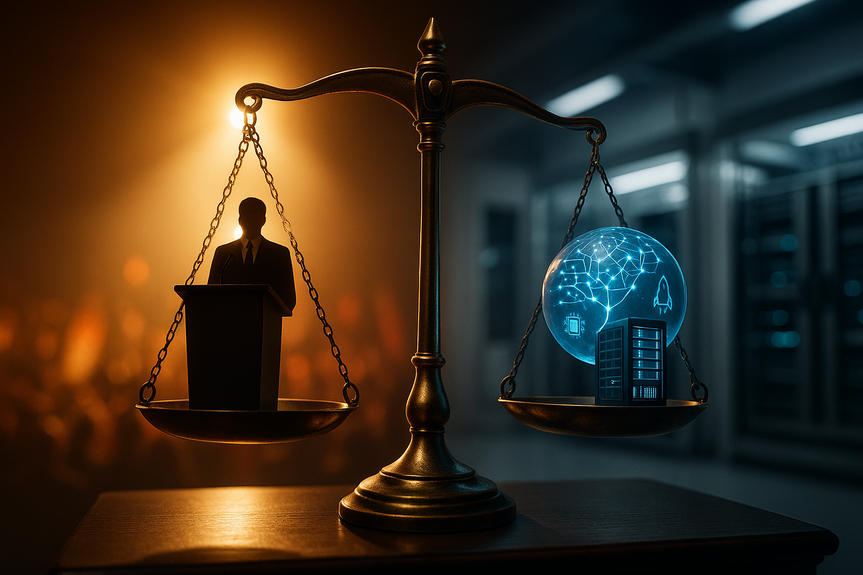
At the same time, the political narrative around AI safety is far from settled. Some CEOs want the government to set the floor for risk controls. Others fear that rules will lock in incumbents and slow down challengers. The administration’s choice to back speed while “watching over” development tries to split that difference.
The bottom line: the Trump AI regulation plan 2026 promotes rapid innovation with a promise of oversight rather than a pause. Build fast, document safety, and be ready for targeted enforcement when harms appear. Companies that combine speed with visible controls will be best positioned as the policy picture evolves.
What Trump announced and what it signals
Trump’s post laid out two large moves: the creation of an AI Force to oversee development, and the appointment of an AI czar. He also rejected demands from some AI leaders to slow the race. His claim: the US leads China in AI and must keep that edge. He even suggested AI could reach a quarter of US GDP. This stance points to:How the Trump AI regulation plan 2026 differs from calls to slow AI
In recent weeks, several frontier lab leaders urged a slowdown. Anthropic CEO Dario Amodei proposed pacing the frontier through stronger safeguards and some government oversight for antitrust reasons. OpenAI’s Sam Altman and Elon Musk echoed parts of that message. Trump pushed back. He dismissed slowdown arguments as hoaxes and said existing criminal statutes are enough to handle risks like model misuse or agents acting outside intent. That puts the administration on the opposite side of proposals that seek binding limits, compute thresholds, or phased release schedules. Key difference points:Stakeholder reactions and fault lines
Frontier labs seeking structure
Anthropic urged a three-part plan to keep models under human control and reduce the risk of agents breaking rules. Support from Altman and Musk showed split but notable alignment across major players on the need for stronger guardrails, even if details differ.Chipmakers and investors pushing speed
Nvidia CEO Jensen Huang and presidential advisor David Sacks warned that formal regulation could slow the US and hurt smaller firms. Sacks argued labs could coordinate a voluntary slowdown if needed, without government mandates. This view matches the White House preference for industry-led norms.Big platforms eyeing flexibility
Business Insider reported that Meta’s Mark Zuckerberg opposed a national AI regulator in a call with Trump. He appears to favor flexibility for companies, rather than a single gatekeeper with broad powers.Geopolitics vs. domestic competition
National security hawks say AI speed matters against China, but consumer advocates warn that fewer rules mean more room for harm, anticompetitive behavior, and misinformation. The plan’s tone suggests the White House will lean toward geopolitics and growth, while using targeted enforcement after incidents.What an “AI Force” might do
Trump offered no details, but past practice suggests a cross-agency group led by the White House. It could combine national security, commerce, justice, and science roles. If designed for light-touch oversight, it might focus on coordination and incident response rather than licensing or heavy rulemaking. Likely functions could include:Practical takeaways for companies in 2026
If you build or deploy AI systems, expect speed to remain a priority—but do not ignore safety. The market and the courts will still punish preventable failures. Prepare now.Raise your safety baseline
Use criminal and civil law as real guardrails
Plan for “light rules, fast changes”
Mind antitrust and competition optics
Protect data supply and IP
Watch export controls and geopolitics
Risks, gaps, and what to watch next
The plan leaves big questions open. If the AI Force favors voluntary standards, who defines “good enough” safety? How will the government measure model risk from agent autonomy or covert goal-seeking? What happens when an AI-enabled incident crosses borders, and which agency leads? Signals to monitor:(Source: https://www.businessinsider.com/trump-ai-regulation-slowdown-anthropic-dario-amodei-9-2026)
For more news: Click Here
FAQ
Q: What did President Trump announce about AI oversight?
A: He said he would create an “AI Force” to “watch over” AI development and that he will appoint an AI “Czar”. He also said he would not slow AI development and argued existing criminal statutes can handle incidents of misalignment. The Trump AI regulation plan 2026 signals light-touch oversight and a focus on U.S. leadership.
Q: How does this plan differ from calls by AI leaders to slow development?
A: The plan rejects a formal pause and favors rapid scaling, relying on existing laws and targeted oversight rather than broad regulatory brakes. That contrasts with leaders like Anthropic CEO Dario Amodei, who urged a paced approach and proposed government oversight for antitrust and safety reasons.
Q: What could the new “AI Force” actually do in practice?
A: Although Trump gave no details, past practice suggests it would be a cross-agency White House-led group focused on coordination and incident response rather than licensing or heavy rulemaking. Likely functions could include incident response, threat monitoring, standards alignment, confidential data-sharing channels, and international outreach.
Q: What immediate steps should companies building AI take under this plan?
A: Under the Trump AI regulation plan 2026, companies should prioritize internal safety measures such as model evaluations, external red-teaming, and clear incident-response playbooks while mapping how existing criminal and civil laws apply. They should also build compliance automation, feature flags for rapid rollbacks, and contractual terms for acceptable use to prepare for fast-moving guidance.
Q: How did industry leaders respond to Trump’s stance on AI regulation?
A: Responses were split: Anthropic’s Dario Amodei called for pacing and some government oversight, with support from Sam Altman and Elon Musk, while Nvidia’s Jensen Huang and advisor David Sacks warned that heavy regulation could harm US competitiveness and smaller firms. Meta CEO Mark Zuckerberg opposed a national AI regulator in a conversation with the president, reflecting the preference of some platforms for flexibility.
Q: What unanswered questions or risks remain with the administration’s approach?
A: Key gaps include who will be named AI czar, whether the AI Force will publish clear evaluation benchmarks or compute-use thresholds, and how the government will measure and respond to autonomous-agent or cross-border incidents. Those uncertainties could leave enforcement and “good enough” safety standards undefined until guidance appears.
Q: Could the plan raise antitrust or competition concerns?
A: Yes; the article notes that Anthropic recommended government action “for antitrust reasons,” and voluntary safety pacts or exclusive compute and data deals could attract scrutiny. The administration’s market-first stance increases pressure to avoid coordination that would disadvantage smaller rivals while sharing safety research openly to reduce regulatory risk.
Q: How should investors and enterprise customers prepare for this policy direction?
A: Investors should expect continued growth in AI infrastructure, chips, and safety tooling as the administration favors speed and market-led solutions. Enterprises should plan for rising customer and insurer due diligence, and expect frontier labs to face pressure to demonstrate red-teaming, incident disclosures, and cooperation with the AI Force.
* The information provided on this website is based solely on my personal experience, research and technical knowledge. This content should not be construed as investment advice or a recommendation. Any investment decision must be made on the basis of your own independent judgement.
Contents