Crypto
30 Aug 2026
Read 13 min
UAE stake in Trump crypto bank: What investors must know *
UAE stake in Trump crypto bank exposes investor risks and regulatory hurdles, guiding better decisions.
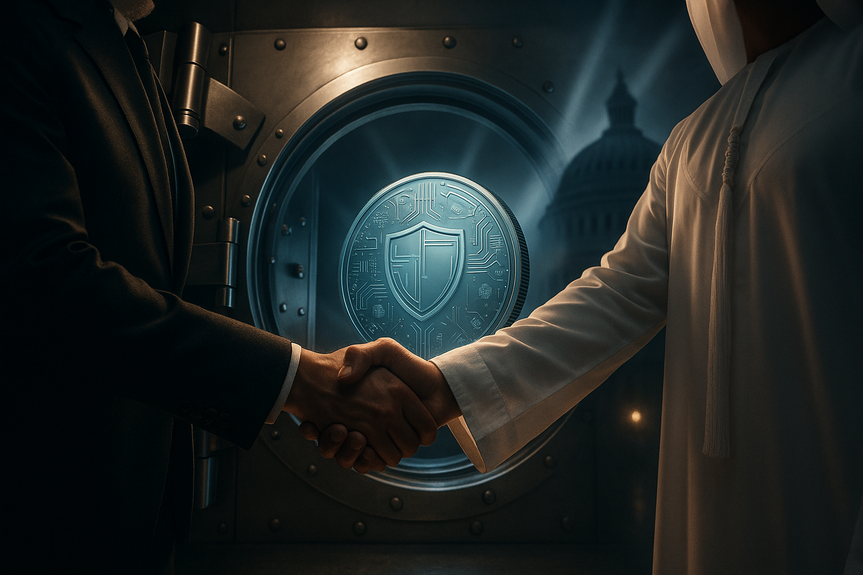
The UAE stake in Trump crypto bank has drawn fresh attention from investors. A group led by Sheikh Tahnoon bin Zayed Al Nahyan reportedly holds 49% of the holding company behind the Trump family’s planned trust bank, which aims to issue and safeguard a dollar-backed stablecoin. Here’s what matters for risk, regulation, and growth.
A new report links the most powerful security official in the United Arab Emirates to the largest position in the holding company behind the Trump family’s crypto-focused bank. The Wall Street Journal says Sheikh Tahnoon and co-investors control 49% via StringZ Holding RSC, while a Trump-affiliated entity owns 38%. The bank-to-be has received preliminary conditional approval from U.S. regulators to operate as a national trust bank and support USD1, a stablecoin tied to the U.S. dollar. The structure, timing, and foreign ties now sit at the center of investor debate.
Building strong capital and liquidity buffers
Establishing risk, audit, and compliance programs
Demonstrating Bank Secrecy Act/AML controls
Hiring qualified, independent leadership
Proving robust custody and technology safeguards
Stronger capital support can lift confidence and lower funding costs
Policy headlines can raise volatility in sentiment and secondary markets
Compliance investments may increase near-term expenses
Clarity from the OCC can unlock growth; setbacks can compress multiples
Customer fund segregation and bankruptcy remoteness
Reserve asset quality and daily liquidity
Real-time risk monitoring and incident response
Independent board committees and auditors
Compliance with BSA/AML, sanctions, and KYC rules
As stablecoin policy advances in the U.S., new rules could affect reserve composition, disclosures, and redemption frameworks.
Reserves sit in safe, liquid instruments
Independent attestations are frequent and detailed
Disclosures show counterparties, custody, and concentration
Redemption windows and fees are simple and predictable
Final OCC approval or added conditions for the trust bank
Board composition, independence, and conflict-of-interest policies
Reserve policy, custody details, and third-party attestations for USD1
Auditor selection, frequency of reporting, and incident disclosures
Banking partners, payment rails, and integration with exchanges and brokers
Hiring in compliance, risk, and security; regulator-facing leadership
Market traction: issuance volumes, redemptions, and on-chain transparency
Any congressional or agency inquiries related to ownership and governance
Upside: capital, global reach, possible regulatory clarity under a trust bank model
Downside: political headlines, foreign-official scrutiny, and execution risk on bank conditions
Neutralizers: independent board, transparent reserves, and crisp, frequent reporting
The bottom line: execution and transparency will decide whether USD1 finds product-market fit beyond early adopters. A stable charter, strong risk management, and verified reserves can draw institutions. Weak disclosures or policy shocks can stall momentum.
In conclusion, the UAE stake in Trump crypto bank adds capital and reach, but it also adds scrutiny. Watch for the final OCC decision, governance details, and reserve reports. If the team delivers on controls and clarity, confidence can build. If not, the risks tied to ownership and policy may dominate the story.
Who Sheikh Tahnoon Is — and Why His Capital Matters
Power and profile
Sheikh Tahnoon bin Zayed Al Nahyan serves as the UAE’s national security advisor and is the brother of the country’s president. He oversees broad business interests tied to Abu Dhabi. Media often call him the “spy sheikh” because of his security role and far-reaching influence.Existing links to the Trump venture
In January 2025, the month Donald Trump began his second term, Tahnoon and other investors put $500 million into World Liberty Financial, according to CNBC’s review of public disclosures. They received a 49% stake. Trump’s 2025 financial disclosure shows $263 million from that deal went to Trump family entities. Now, the WSJ reports that the same group holds the largest position in WLTC Holdings, the bank’s holding company. This builds on a pattern: foreign investors have paid Trump businesses at least $59.5 million in licensing fees during the first year of his return to office, CNBC previously reported.Structure, Ownership, and the Path to a Charter
How the pieces fit
The WSJ says StringZ Holding RSC, linked to Sheikh Tahnoon and co-investors, owns 49% of WLTC Holdings, while a Trump-affiliated entity controls 38%. This setup concentrates influence among two blocs with deep ties to the project. The UAE stake in Trump crypto bank therefore sits at the core of the venture’s control and funding story.Why a national trust bank?
The Office of the Comptroller of the Currency granted preliminary conditional approval for a federally chartered national trust bank connected to World Liberty. This charter style allows specialized services like digital asset custody and stablecoin issuance, under federal oversight. The OCC’s conditional status means the team must still meet specific requirements before launch, which can include:What the UAE stake in Trump crypto bank could mean for investors
Potential upside
Money and networks from Abu Dhabi can speed product launch, partnerships, and distribution. A deep-pocketed investor may help the bank scale USD1 and add services like custody, payments, and on/off-ramps. Ties to Gulf markets could open cross-border corridors for settlements and remittances.Concentration and control
Two major blocs hold most of the equity reported. That can create quick decisions and aligned strategy. It also raises questions about governance if the board is not independent enough. Investors should look for clear rules on related-party deals, voting rights, and conflict-resolution processes.Reputation and political risk
Because Tahnoon is a senior foreign official, scrutiny will be high. The Trump administration has also negotiated with the UAE over access to advanced U.S. AI chips. The U.S. approved sales to G42, a state-backed AI firm controlled by Tahnoon, and later eased purchase limits, CNBC reported. Even if all actions are lawful, the optics can drive headlines, inquiries, or delays that affect timelines and valuation.How this could show up in price and performance
The Policy and Geopolitics Watchlist
AI chip ties and scrutiny risk
The UAE’s ambitions in AI, including G42’s purchases of U.S. chips, sit near sensitive national security lines. Any change in export control policy, CFIUS posture, or congressional focus could spill into broader reviews of foreign involvement in financial infrastructure. This does not mean the project cannot proceed; it means investors should track Washington signals that could affect timelines or scope.Banking regulators and stablecoin oversight
The OCC’s conditional nod is a start, not a finish. The bank must meet all conditions before it can issue, redeem, or hold USD1 at scale. Supervision will likely focus on:Stablecoin Mechanics: How USD1 Could Work
Reserves and redemption
A dollar-backed stablecoin like USD1 aims to maintain a 1:1 value to the U.S. dollar. The issuer typically holds cash and high-quality, short-term U.S. government securities. Users expect fast minting and redemptions, tight spreads, and clear attestations. Trust increases when:Key risks to watch
If redemptions spike, the issuer must liquidate assets without loss. Poor reserve quality or slow settlement can create pressure on the peg. Strong controls, credible auditors, and tested operations reduce run risk and reassure institutional partners.Signals to Watch Over the Next 6–12 Months
What the Companies Say
World Liberty’s spokesman says the firm is a private American fintech company, not a political organization, and that its trust company has separate governance. He says no one at World Liberty works for the U.S. government and that the company neither seeks nor receives special treatment. He did not comment on the reported ownership breakdown. The White House has previously said President Trump acts in the best interest of the public and denied conflicts of interest.Investor Takeaways
Risk and reward live side by side
Investors are weighing a rare mix: a fast-moving fintech plan with federal oversight; a strong capital base linked to the Gulf; and political attention that can change the narrative overnight. Clear governance, independent controls, and regular disclosures will be the difference between durable trust and fragile hype.(Source: https://www.cnbc.com/2026/08/27/uae-spy-sheikh-trump-family-crypto-bank.html)
For more news: Click Here
FAQ
Q: Who is Sheikh Tahnoon and what role does he play in the planned Trump family crypto bank?
A: Sheikh Tahnoon bin Zayed al Nahyan is the United Arab Emirates national security advisor, often called the “spy sheikh,” and he oversees broad business interests tied to Abu Dhabi. The Wall Street Journal reported that he and co-investors control a 49% stake in WLTC Holdings via StringZ Holding RSC, while a Trump-affiliated entity owns 38%.
Q: What does the UAE stake in Trump crypto bank mean for ownership and control of the venture?
A: The UAE stake in Trump crypto bank sits at the core of the venture’s control and funding story because two blocs—StringZ’s reported 49% position and a Trump-affiliated 38%—concentrate influence over WLTC Holdings. That concentration raises governance questions and makes clear rules on related-party deals, voting rights, and independent oversight important for investors.
Q: What regulatory approval has World Liberty received and what conditions remain before the bank can operate?
A: The Office of the Comptroller of the Currency granted World Liberty preliminary conditional approval to establish a federally chartered national trust bank that could issue and safeguard the USD1 stablecoin. The OCC’s conditional status means the bank must meet requirements such as capital and liquidity buffers, risk and compliance programs, BSA/AML controls, independent leadership, and robust custody and technology safeguards before opening.
Q: How could the UAE stake in Trump crypto bank influence the venture’s growth and investor returns?
A: The UAE stake in Trump crypto bank could provide capital, networks, and market reach that accelerate product launch and help scale USD1, potentially lifting confidence and lowering funding costs. At the same time, political headlines and increased compliance spending can raise volatility and near-term expenses, while final regulatory clarity will be a key determinant of valuation.
Q: What geopolitical and policy risks arise from the reported UAE involvement?
A: Because Tahnoon is a senior foreign government official, the arrangement has drawn heightened scrutiny and the timing coincides with U.S. negotiations over advanced AI chips to the UAE, including approved sales to G42 and eased limits. Changes in export-control policy, CFIUS posture, or congressional focus could spill into reviews of foreign involvement in financial infrastructure and affect timelines or scope.
Q: How is the USD1 stablecoin intended to work and what operational risks should holders watch for?
A: USD1 is designed to maintain a 1:1 peg to the U.S. dollar by holding cash and high-quality, short-term U.S. government securities as reserves and offering fast minting and redemptions with regular attestations. Key operational risks include redemption spikes that force asset liquidation, poor reserve quality or slow settlement that pressure the peg, and weak controls that raise run risk.
Q: What governance and transparency measures should investors monitor in the coming months?
A: Investors should watch for final OCC approval or added conditions, board composition and independence, clear reserve and custody policies, third-party attestations, auditor selection and reporting frequency, and banking partners and payment-rail integrations. They should also monitor hiring in compliance and regulator-facing roles, market traction such as issuance volumes and redemptions, and any congressional or agency inquiries related to ownership and governance.
Q: How have World Liberty and the White House responded to reports about ownership and conflicts?
A: World Liberty’s spokesman said the firm is a private American fintech with separate governance and that no one at World Liberty works for the U.S. government, but he did not address the reported ownership breakdown. The White House did not immediately respond to CNBC’s request for comment and has previously said President Trump acts in the best interest of the public and denied conflicts of interest.
* The information provided on this website is based solely on my personal experience, research and technical knowledge. This content should not be construed as investment advice or a recommendation. Any investment decision must be made on the basis of your own independent judgement.
Contents