Crypto
01 Feb 2026
Read 11 min
why altcoins are falling 2026 and how to limit losses *
why altcoins are falling 2026: key signals and risk rules to protect capital during monthly downturn
Altcoins keep sliding as red monthly candles stack up. If you wonder why altcoins are falling 2026, look to sticky rates, tech-stock fears, and policy uncertainty. Ethereum, XRP, Solana, and Dogecoin show weak momentum, while prediction markets price low odds of a quick rebound. Here’s what’s driving losses and how to cut risk.
Investors hoped the new year would bring a bounce. Instead, the sell-off kept going. Ethereum is down more than 8% over the last 30 days. XRP, Solana, and Dogecoin fell about 5% to 7%. Data shows a long run of red months for many large altcoins. Momentum is weak, and buyers are not stepping up.
Market odds tell the same story. Event contracts show only a small chance that Ethereum finishes the month above $3,500. The odds for XRP over $2.10, Dogecoin over $0.14, and Solana above $150 are also low. Traders are not betting on a sharp move higher in the near term.
Only about a 2% chance for ETH to end the month above $3,500
Roughly a 6% chance for XRP to top $2.10
Near 5% odds for DOGE to rise above $0.14
About 1% odds for SOL to reclaim $150
These numbers reflect low conviction in a quick bounce. They may change, but today the path of least resistance still points lower or sideways.
Define a max loss per trade (for example, 1% to 2% of your account).
Use stop-loss orders at levels that break your thesis, not at round numbers everyone sees.
Keep position size small when volatility spikes or liquidity thins.
Stick to pairs with tight spreads and steady volumes.
Be careful with micro-caps and long-tail tokens until the trend improves.
Review token unlock schedules and treasury sell pressure.
Mix smart-contract platforms, scaling solutions, and infrastructure plays.
Consider a core position in BTC if you hold alts; BTC often holds up better in stress.
Avoid overexposure to one narrative, like AI or memecoins.
Use small short hedges in futures or options during clear downtrends.
Alternatively, reduce beta by shifting part of the portfolio to BTC or stablecoins during weak tape.
Time-box hedges; do not let them become permanent bets.
Use dollar-cost averaging for long-term positions; avoid catching falling knives with a single buy.
Wait for confirmation: reclaim of a key moving average, higher lows, and rising volume.
Map support and resistance on higher time frames; plan trades around those levels.
Track perpetual funding rates; avoid paying high funding to hold a losing bias.
Use limit orders where possible to reduce slippage.
Consolidate trades to save on fees; many small round trips eat returns.
Check counterparty risk for lending, staking, and restaking.
Scrutinize token incentives; high APR may signal unsustainable emissions.
Prefer native staking or well-audited protocols over complex routes.
Log every trade and transfer.
Review local rules on wash sales and holding periods.
Consult a qualified tax professional before year-end.
Liquidity: bid-ask spreads, depth, and exchange outflows/inflows
Momentum: higher highs/lows, moving averages, relative strength vs. BTC
Participation: spot volumes, open interest, and funding balance
Builders: code commits, network usage, fees, and new addresses
Policy: headlines on the CLARITY Act and other enforcement actions
Clear progress on the CLARITY Act that reduces legal risk for major tokens
Evidence of cooling inflation and a credible path to rate cuts later in the year
Stabilization in big tech stocks after earnings, easing correlation pressure
On-chain growth: rising fees and users on leading networks like Ethereum and Solana
A deeper tech sell-off if AI revenue misses expectations
A tighter-than-expected Fed stance, especially if a hawkish chair is confirmed
Fresh regulatory actions that limit U.S. market access or liquidity
Large token unlocks or treasury sales that flood supply
In short, the tape is weak because money is tight, stocks are shaky, and the rules are still in flux. That is why altcoins are falling 2026, and it is also why patience and risk control matter. Keep positions small, favor liquid assets, hedge when needed, and let the market prove strength before you bet big.
Why altcoins are falling 2026: The key drivers
Sticky rates and a hawkish tilt
U.S. interest rates shape risk appetite. A lower-rate path often helps growth assets, including crypto. But the market now sees fewer cuts in the first quarter. President Trump named Kevin Warsh as his pick for Federal Reserve chair, and many view him as hawkish. That adds to the idea that policy may stay tight for longer. When cash is expensive, liquidity is scarce. That hurts altcoins first.Equity correlation and AI exuberance
Crypto tracks stocks more than before. When tech names sell off, crypto often follows. Fears that AI-related stocks ran too far are spreading into digital assets. A research head at a crypto options firm noted that macro conditions look “atrocious” for the rest of Q1. If the Nasdaq stumbles, altcoins rarely rally against that tide.Policy uncertainty and market structure
Rule clarity matters. The industry awaits details on the CLARITY Act, a market structure bill that could frame how tokens trade and settle in the U.S. More integration with traditional finance is coming, but the timeline and scope remain unclear. That limbo keeps big money cautious, and it caps upside until rules settle. When people ask why altcoins are falling 2026, the first answers are rates, correlation, and regulatory fog. Put those together, and you get weak demand and persistent selling pressure.What the market is saying right now
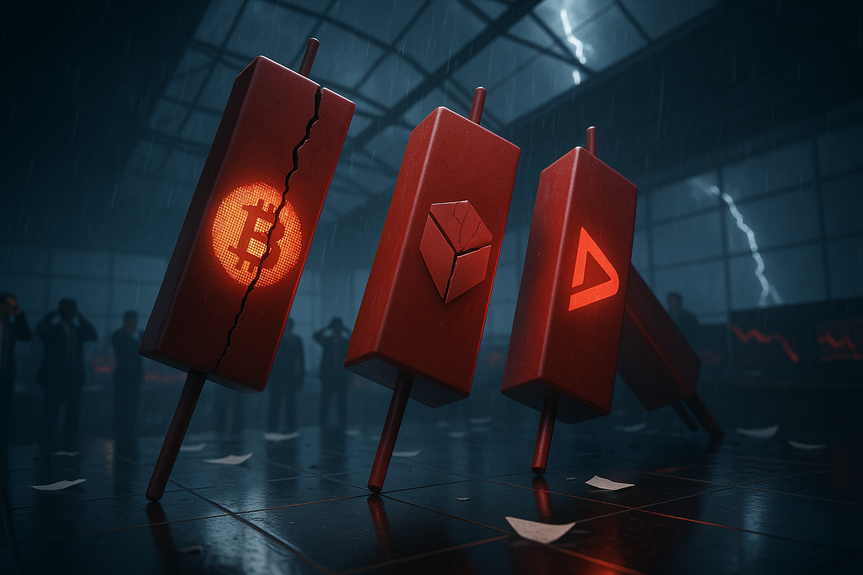
Stacked red candles
Several major coins have printed months of losses in a row. Ethereum is on track for its fifth red month. XRP, Solana, and Dogecoin may log four straight red months. This streak signals trend persistence. It tells traders to respect momentum until price proves otherwise.Implied odds show low confidence
Prediction markets give fast reads on sentiment:How to limit losses without overreacting
Set clear risk limits
You cannot control the market, but you can control exposure.Favor liquidity and quality
Thin coins can fall fast during sell-offs. Focus on assets with strong depth and active markets.Diversify across drivers
Don’t stack the same risk five times.Hedge the downside
Simple hedges can soften drawdowns.Improve entries and exits
Good timing helps even in choppy markets.Mind funding, fees, and slippage
Costs compound during chop.Be careful with yield
Yield can mask risk.Use tax tools to cut net losses
Tax rules vary, but harvesting losses can help offset gains.Track health signals
Have a simple checklist you update weekly. It helps narrow noise and focus on the real drivers. Keep a practical list that reflects why altcoins are falling 2026 without guessing.Timelines and scenarios for a rebound
What could help
What could hurt
For more news: Click Here
FAQ
Q: What are the main reasons why altcoins are falling 2026?
A: The article points to sticky interest rates and a hawkish Fed tilt, growing correlation with struggling tech stocks and AI exuberance concerns, and policy uncertainty around the CLARITY Act as the main drivers. These forces reduce liquidity and buyer demand, producing persistent selling pressure across many altcoins.
Q: How severe have recent monthly losses been for major altcoins?
A: Ethereum is on track for its fifth consecutive monthly red candle and has dropped more than 8% over the last 30 days, while XRP, Solana, and Dogecoin have fallen roughly 5%–7% and may log four straight red months. The streak of stacked red candles signals weak momentum and trend persistence for large altcoins.
Q: What do market-implied probabilities say about a near-term rebound?
A: Event contracts show low odds for quick recoveries: about a 2% chance ETH tops $3,500 this month, roughly 6% for XRP above $2.10, near 5% for DOGE above $0.14, and about 1% for SOL above $150. Those low probabilities align with the broader view that buyers are not stepping up and that the path of least resistance remains lower or sideways.
Q: How has the Fed chair nomination affected crypto sentiment?
A: President Trump’s pick of Kevin Warsh, viewed by many as hawkish, has increased fears of fewer-than-expected rate cuts and a tighter policy outlook. Analysts in the article say that a hawkish tilt compounds negative sentiment and squeezes liquidity for risk assets like altcoins.
Q: Why does tech-stock weakness and AI exuberance spill over into crypto markets?
A: Crypto has become more correlated with equities, especially tech names, so sell-offs in AI-exposed stocks tend to spill into digital assets. The article notes that fears of an inflated tech sector make conditions “atrocious” for Q1 and reduce the likelihood of altcoin rebounds while tech struggles.
Q: What practical steps does the article recommend to limit losses during the downturn?
A: It recommends setting clear risk limits (for example, a max loss of 1%–2% per trade), using stop-loss orders and keeping position sizes small, and favoring liquid, high-volume assets to avoid rapid slippage. The article also suggests hedging with small shorts in futures or options, using dollar-cost averaging for entries, and consolidating trades to reduce fees.
Q: Could progress on the CLARITY Act or on-chain growth spark a recovery?
A: The article says that clear progress on the CLARITY Act and visible on-chain growth like rising fees and users could reduce legal risk and be positive for prices. However, analysts quoted caution that the bill is unlikely to drive short-term moves and that weakness may persist into early February.
Q: How should investors manage funding rates, fees, and yield risk while markets are weak?
A: Monitor perpetual funding rates and avoid paying high funding to hold losing positions, use limit orders to reduce slippage, and consolidate trades to lower fees. Be cautious with yield products by checking counterparty risk, scrutinizing token incentives, and preferring native staking or well-audited protocols over complex restaking routes.
* The information provided on this website is based solely on my personal experience, research and technical knowledge. This content should not be construed as investment advice or a recommendation. Any investment decision must be made on the basis of your own independent judgement.
Contents