Crypto
20 Dec 2025
Read 13 min
why is bitcoin down 2025 Discover 5 hidden reasons *
why is bitcoin down 2025 Learn five hidden causes behind the slump and steps to protect your crypto
Bitcoin’s slide in late 2025 isn’t about one villain. If you’re asking why is bitcoin down 2025, the answer blends leverage wipeouts after an October flash crash, a “trust tax” from scams and stunts, fast-moving retail flows, policy gains that were already priced in, and fear sparked by real-world crime stories.
Bitcoin surged to about $126,000 in October, then lost steam and slipped to the mid-$80,000s. That left it down for the year, even as the S&P 500 rose. This puzzled many investors. Risk appetite was alive in tech stocks, rules in Washington leaned friendlier, and exchange-traded funds drew billions. So what changed? The short answer: the market’s plumbing, the culture around crypto, and the timing of new investors’ expectations. The long answer unfolds below.
Funding rates and futures premiums that flip from positive to negative
Rising exchange balances when traders move coins in to sell or cover
Shrinking open interest as positions get closed or liquidated
When leverage drives the party, the hangover lasts longer than a weekend.
Price breaks to new highs. Newcomers buy because “it’s working.”
Price stalls. Late buyers see red and panic-sell.
Selling pressure grows as stops and leverage liquidations stack up.
Price overshoots to the downside, scaring away the next wave.
A Cornell economist described how retail flows can magnify volatility in both directions. You could see it in 2025. The rally fed on itself as number-go-up drew attention. Then, when the number went down, there wasn’t a strong base of holders with conviction at the new highs. That gap accelerated the drop.
If you want clues, watch net ETF flows, exchange retail volumes, and social search trends. When those cool while funding rates stay jumpy, it signals weak hands are in control.
Use regulated ETFs or qualified custodians if you don’t need self-custody.
For self-custody, split keys and store them offline in different places.
Never share holdings publicly; lower your social footprint.
Enable hardware keys and limit phone-based recovery.
Each step reduces friction and fear. Reduced fear draws more steady capital. Until that happens at scale, the safety narrative adds a brake on price during shaky periods.
Leverage overhang kept pressure on after the October shock.
Culture and conduct issues created a persistent trust discount.
Retail flows chased highs and accelerated the fall on the way down.
Policy optimism was already priced in, while tech stocks lured capital away.
Security fears made some investors avoid direct exposure.
None of these mean Bitcoin’s long-term story is broken. They do explain the late-2025 weakness. They also offer a map for what could repair sentiment: cleaner culture, safer user experiences, lower leverage, and fresh demand sources that don’t flee at the first pullback.
ETF net flows: sustained positive inflows suggest stickier demand.
Futures funding and open interest: normalized levels signal a healthier base.
Exchange coin balances: declines often match accumulation by long-term holders.
On-chain activity: growth in active addresses and fees can hint at real use.
Regulatory milestones: clarity on stablecoins, custody, and market structure can widen participation.
Scam and crime trends: fewer incidents shrink the trust tax over time.
If these indicators improve together, the market can stabilize and rebuild. If they worsen, expect more chop.
Separate narrative from flows. Friendly policy helps, but flows move price.
Respect leverage. When positioning is crowded, small shocks turn big fast.
Demand trust. Culture and consumer protection affect capital access.
Choose your exposure. ETFs, custodians, and self-custody each trade off control and risk.
Think in cycles. Bitcoin has recovered from many drawdowns, but timing is rarely smooth.
In other words, the “why” is a system, not a soundbite. When several weak links pull at the same time, even a strong asset struggles.
Bitcoin’s price often tests patience before it rewards it. The same 2025 forces that pushed it down can also fade. Leverage gets flushed. Trust improves as scams are curbed and safer products spread. Retail returns when momentum flips. Policy progress can unlock new rails for capital. Over time, those shifts can rebuild the path higher.
Conclusion: If you’re wondering why is bitcoin down 2025, look beyond headlines. A leverage hangover, culture-driven trust gaps, flighty retail flows, pre-priced policy gains, and safety fears all weighed on demand. Watch the indicators above. When they turn, so will the answer to why is bitcoin down 2025.
(p(Source: https://www.cnn.com/2025/12/18/business/crypto-bitcoin-slump-nightcap)
Why is bitcoin down 2025: five forces investors overlook
1) The leverage unwind that didn’t end with the first dip
Bitcoin’s run-up was powered by heavy leverage. Traders borrowed to bet on higher prices using perpetual futures and options. That leverage cuts both ways. In October, a sharp drop triggered a chain of forced liquidations. When collateral falls, exchanges auto-sell holdings to cover losses. That selling drives prices lower, which triggers more liquidations. The cycle feeds on itself. Even after the first wave, open interest remained elevated. Many traders “bought the dip” with more leverage, hoping for a fast rebound. But the rebound stalled. Each push lower forced more exits. The result was a slow bleed into November and December instead of a clean V-shape recovery. That is a big piece of why is bitcoin down 2025. It wasn’t just one crash; it was the overhang of excess risk that took months to flush out. You can track this dynamic in:2) The culture drag: a trust tax on price
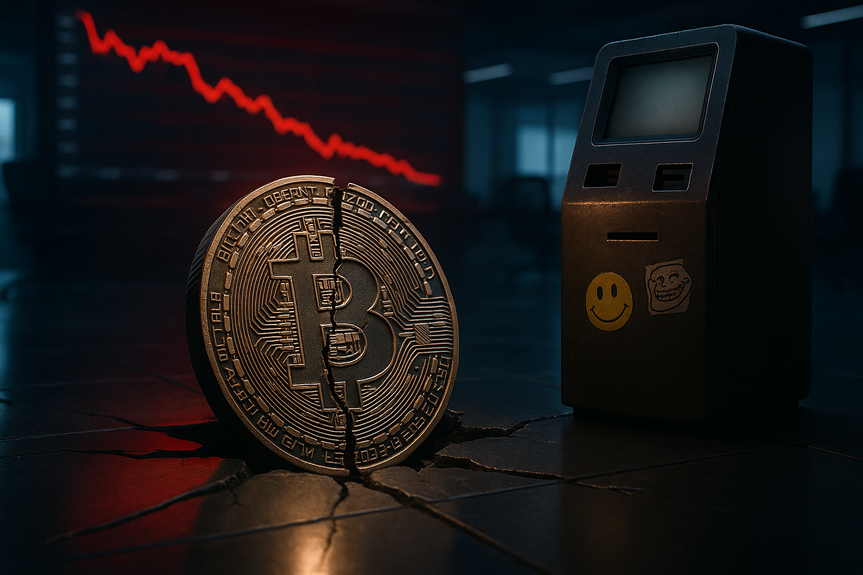
Crypto had a year with no giant blowups, but it still faced a serious trust problem. Memecoin promoters drew attention with crude stunts at sports events. Garden-variety scams spread through crypto ATMs, costing Americans hundreds of millions of dollars this year. Worse, “wrench attacks” — kidnappings aimed at stealing wallet access — made headlines, with more than 30 reported cases. Every story like that raises a “trust tax.” It makes a cautious investor pause. A pension board or family office reads those headlines and decides to wait. Retail buyers stop telling friends to join. A trust gap does not show up on a price chart, yet it weighs on demand. If you want to understand why is bitcoin down 2025, remember that price tracks belief as much as math. Culture and conduct shape belief. Crypto can cut this tax by policing fraud more openly, backing real consumer protections, and spotlighting safer on-ramps. ETFs help by offering regulated custody. But the broader culture still matters. When the loudest voices chase shock value, the asset pays the fee.3) Retail whiplash: FOMO in, fast exit out
The late-year rally attracted many new buyers after the election. They liked the green candles, not the long-term case. When momentum cooled, they left quickly. Retail flows do this often. They chase strength and exit at the first sign of stress. That behavior amplifies swings both up and down. A simple pattern played out:4) Policy wins were priced in; opportunity cost rose
Regulatory fear eased in 2025. A friendlier administration pushed pro-crypto hires and legislation. Institutions gained easier access through ETFs. These were bullish catalysts — and the market rallied ahead of them. By the time approvals and political shifts were real, much of the upside was already in the price. Classic “buy the rumor, sell the news.” At the same time, there was a strong competing magnet for capital. The Nasdaq outperformed, and AI-heavy stocks kept delivering. For many investors, the question became simple: Why hold a choppy asset that keeps slipping if AI and cloud plays offer steadier gains? Opportunity cost rose. That’s another layer of why is bitcoin down 2025. Supportive policy helped earlier in the year. But once the policy story turned old news, Bitcoin still needed fresh fuel: stronger cash inflows, new use cases, or clear macro tailwinds. Those were weaker in late 2025.5) Safety fears from real-world crime stories
Even if the chance is small, fear of violent theft is different from fear of price dips. Headlines about kidnappings for seed phrases stick with people. Self-custody is empowering, but missteps are costly. Investors worry about mistakes, SIM swaps, and physical threats. That worry makes them choose safer routes or sit out entirely. This is not an argument against crypto. It is an argument for better defaults:Putting the puzzle together
No single factor explains the decline. Instead, five forces lined up at once:What to watch next
Investor takeaways
For more news: Click Here
FAQ
Q: What caused bitcoin’s slump in late 2025?
A: If you’re asking why is bitcoin down 2025, the decline reflected a mix of forces: a leverage unwind after an October flash crash, a “trust tax” from scams and stunts, fast-moving retail flows, policy gains that were largely priced in, and fear sparked by real-world crime stories. These factors together pushed bitcoin from a roughly $126,000 peak to the mid-$80,000s and left it down for the year.
Q: How did leveraged trading amplify the October drop?
A: Heavy leverage meant traders used borrowed positions like perpetual futures and options, so a sharp drop triggered forced liquidations that auto-sold collateral and pushed prices lower. Even after the initial crash, elevated open interest and traders “buying the dip” with leverage kept the bleed going for months.
Q: What is the “trust tax” and how did it affect demand?
A: The “trust tax” describes reputational damage from memecoin stunts, widespread crypto ATM scams that cost Americans more than $330 million this year, and reports of violent “wrench attacks” targeting investors. Those stories made cautious investors and institutions pause, reducing demand even when other catalysts existed.
Q: Didn’t policy wins and ETF inflows help bitcoin in 2025?
A: Pro-crypto policy moves and billions flowing into bitcoin ETFs were bullish catalysts, but much of that upside was already priced into the market before approvals, leaving little fresh fuel afterward. That dynamic is another reason why is bitcoin down 2025 as capital found steadier returns elsewhere like the Nasdaq.
Q: How did retail investors contribute to the market’s volatility?
A: Retail buyers chased the late-year rally because “the number was going up,” then exited quickly when momentum cooled, creating FOMO in and fast exits that amplified swings. As stops and leveraged positions stacked up, those late buyers helped accelerate the selloff from the highs.
Q: Are safety fears from kidnappings and theft a real factor?
A: Yes, reports of more than 30 wrench attacks and high-profile cases of kidnappings to seize wallet access raised safety concerns that pushed some investors toward safer exposure or to sit out entirely. The article recommends safer defaults like using regulated ETFs or qualified custodians, splitting keys offline, and limiting phone-based recovery.
Q: What indicators should investors watch to see if bitcoin may stabilize?
A: Monitor ETF net flows, futures funding and open interest, exchange coin balances, on-chain activity, regulatory milestones, and trends in scams and crime to gauge whether demand is stabilizing. Improvements across these metrics would signal changing conditions and help answer why is bitcoin down 2025 over time.
Q: Does the 2025 slump mean bitcoin’s long-term outlook is broken?
A: No, the article argues that none of these factors prove bitcoin’s long-term story is dead, because leverage can be flushed and trust can improve if scams are curbed and safer products spread. Over time, those shifts alongside renewed retail and institutional demand could rebuild the path higher.
* The information provided on this website is based solely on my personal experience, research and technical knowledge. This content should not be construed as investment advice or a recommendation. Any investment decision must be made on the basis of your own independent judgement.
Contents