Crypto
12 Jul 2026
Read 12 min
Why New Hampshire canceled bitcoin bond and who’s affected *
Why New Hampshire canceled bitcoin bond and what it means for state finances, investors and miners
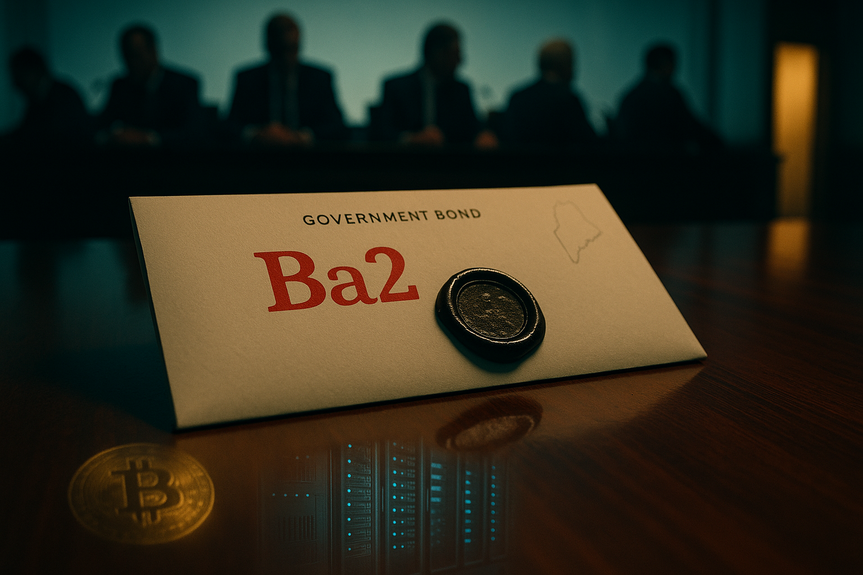
New Hampshire’s Executive Council voted 3-2 to halt a first-of-its-kind, state-authorized bitcoin-backed bond tied to CleanSpark’s mining and data center plans. Why New Hampshire canceled bitcoin bond centers on reputational risk, market volatility, and election-year politics, despite a Ba2 rating from Moody’s and prior pro-crypto steps by the state.
On July 9, 2026, New Hampshire ended a high-profile plan to support a private bond of up to $100 million connected to Bitcoin mining firm CleanSpark. The Business Finance Authority would have issued the bond, and Moody’s had assigned a Ba2 rating. The Executive Council’s vote, the final approval step, stopped the deal. The move surprised many because New Hampshire has pursued pro-crypto policy, including a state crypto reserve. Supporters called the vote short-sighted; opponents cited the state’s financial reputation.
Reputation: Aligning the state with a volatile asset could harm New Hampshire’s standing in capital markets.
Volatility: Bitcoin’s large price swings can stress debt repayment plans linked to mining revenue.
Rating: A Ba2 (non-investment grade) label signals higher risk and higher borrowing costs.
Politics: It is an election year; councilors faced voter scrutiny and low risk appetite.
Policy lag: Federal crypto rules are still unfinished, adding uncertainty to a novel structure.
To understand Why New Hampshire canceled bitcoin bond, keep in mind that the council serves as a gatekeeper for big financial actions. Even with a willing issuer and a known corporate counterparty, members must judge whether the deal fits the state’s risk posture today.
Clear separation from taxpayers’ obligations
Robust collateral and cash reserves
Transparent risk disclosures and stress tests
Stronger covenants tied to market triggers
Test cash flows against deep price drawdowns and hash rate jumps.
Examine off-take and power agreements for firmness and hedging.
Check that covenants react early to stress, not after liquidity runs low.
Smaller, pilot-sized tranches to build a track record
Stronger reserve funds and over-collateralization
Hybrid revenue from both mining and traditional data services
Performance-linked step-ups to protect investors while rewarding stability
Why New Hampshire canceled bitcoin bond: the short answer
The council majority weighed the upside of innovation against visible risks. Their core concerns were:How the deal was supposed to work
The issuer and the project
The Business Finance Authority of the State of New Hampshire would have issued the bond, channeling capital to CleanSpark for mining and data center expansion. This is often called a conduit structure, where a public authority issues debt for a private project.The rating and investor audience
Moody’s assigned a Ba2 rating. In plain terms, that is below investment grade and indicates meaningful credit risk. The target buyers likely included high-yield investors familiar with energy, infrastructure, or digital-asset-linked revenue models. The rating helped establish a baseline for coupon levels and covenant strength.Risk and repayment
Repayment would have relied on project cash flows. Mining economics link to Bitcoin’s price, network difficulty, energy costs, and operational efficiency. If any of these swing the wrong way, cash flow can tighten. A speculative-grade rating reflects those possible stress points.Who is affected by the reversal
CleanSpark
The company loses a clear, state-sanctioned funding lane and must seek other financing. That could mean private loans, equity issuance, or different bond structures, perhaps without a state conduit.Business Finance Authority
The authority misses a chance to pioneer a novel asset class. It may also face tougher approval dynamics for future digital-asset-related deals.Investors
High-yield and crypto-interested bond buyers lose a rated instrument that could have set pricing and covenant templates for similar offerings. Without it, the market waits longer for a benchmark deal.Other states and cities
Public finance officials elsewhere will read the signal: innovation is possible, but political and reputational hurdles remain. Expect slower timelines, tighter covenants, and more scrutiny on any crypto-linked public issuances.New Hampshire taxpayers and voters
While conduit bonds typically limit direct taxpayer exposure, voters still care about what the state endorses. The council likely judged that any perceived link to Bitcoin volatility could be a political liability.Ratings, risk, and reputation
What Ba2 means in everyday terms
A Ba2 rating is speculative. Investors demand higher yields to compensate for risk. That makes funding more expensive and emphasizes the need for strong project performance and protective bond terms.Why reputation matters to a state
State authorities value stable access to capital. If markets think a state backs riskier deals, borrowing costs for future projects can rise. Even if taxpayers are not on the hook, perception shapes pricing.Volatility vs. structure
Good legal structure can reduce risk—through collateral, reserves, and covenants. But if the main revenue driver (mining returns tied to Bitcoin) is volatile, the risk remains visible. The council likely saw structure as helpful but not a cure-all.Politics, optics, and timing
Election-year dynamics
Council members face voters soon. In tight races, even a small chance of negative headlines can outweigh the promise of innovation. “Safe” choices tend to win in such cycles.Public understanding of crypto
Even as crypto adoption grows, many voters still see Bitcoin as unstable. Linking a state-branded bond to mining can look risky, regardless of technical safeguards.National policy uncertainty
Federal crypto standards remain in progress. Without clear nationwide rules, local officials may choose to wait rather than lead on the most visible deals.New Hampshire’s pro-crypto record—and why it was not enough
New Hampshire has been out in front on digital assets, including creating a state crypto reserve last year. Those moves signaled openness to responsible innovation. Yet Why New Hampshire canceled bitcoin bond shows that being pro-innovation does not mean endorsing every structure. Policymakers can support blockchain progress while passing on a single financing method that feels too risky at a given moment.What this means for other jurisdictions and issuers
Expect higher bars for approval
Authorities will want airtight structures:Push toward private placements
If public approval proves hard, companies may opt for private placements with specialized investors who can move faster and accept volatility in exchange for higher yields.More emphasis on non-price fundamentals
Power contracts, efficiency gains, and diversified revenue (such as AI data center hosting) can moderate mining cyclicality. Issuers who show control over these factors will stand out.Lessons for investors
Separate innovation from risk tolerance
Innovation can create opportunity, but risk tolerance varies by investor and issuer. A speculative-grade, crypto-linked bond needs careful sizing in a portfolio.Do the homework
Watch the policy tape
State-by-state politics will shape the near-term map for crypto-linked debt. Clearer federal rules could lower the risk premium over time.What could happen next
Reconsideration is possible
Supporters note that it only takes one vote to flip the 3-2 outcome. If new information changes risk views—or election pressures ease—the council could revisit the plan or a modified version.Alternative structures
Issuers might propose:Market testing without state branding
CleanSpark and peers could continue in the private market, proving performance and then returning with data that eases public concerns. In the end, this decision is a reminder that market innovation must pass both financial and political tests. The council weighed credit risk, public optics, and timing, and chose caution. Understanding Why New Hampshire canceled bitcoin bond helps investors, issuers, and policymakers craft better structures that can survive both market swings and election cycles.For more news: Click Here
FAQ
Q: Why did New Hampshire cancel the bitcoin bond?
A: Why New Hampshire canceled bitcoin bond centers on reputational risk, market volatility, and election-year politics. The Executive Council voted 3-2 on July 9, 2026 to halt a state-authorized conduit for up to $100 million tied to CleanSpark, citing concerns about the state’s financial reputation and federal policy uncertainty.
Q: Who voted to halt the bond and what was the immediate outcome?
A: New Hampshire’s Executive Council voted 3-2 to stop the project, and that vote served as the final approval step to end the deal. The decision prevented the Business Finance Authority from issuing the conduit bond backing CleanSpark’s mining and data center expansion.
Q: How would the bond have been structured and repaid?
A: The Business Finance Authority would have issued the bond in a conduit structure to back up to $100 million of private debt for CleanSpark’s mining and datacenter work. Repayment would have depended on project cash flows tied to Bitcoin mining economics rather than a direct state obligation.
Q: What did Moody’s Ba2 rating mean for the proposal?
A: Moody’s assigned the bond a Ba2 rating, which is below investment grade and indicates speculative credit risk. That grading implies investors would demand higher yields and signals higher borrowing costs and potential stress on repayment under adverse conditions.
Q: How does the cancellation affect CleanSpark and potential investors?
A: CleanSpark loses a state-sanctioned funding lane and now must seek alternatives such as private loans, equity issuance, or different bond structures. Investors lost a rated instrument that could have provided a benchmark for pricing and covenant templates for similar crypto-linked offerings.
Q: What role did politics and public perception play in the council’s decision?
A: Election-year dynamics made councilors more risk-averse, and members faced voter scrutiny that pushed them to prioritize the state’s financial reputation. Public wariness about Bitcoin’s volatility and the lack of finished federal crypto rules added to reluctance to endorse a high-visibility, state-branded crypto-linked bond.
Q: What lessons should other jurisdictions and issuers take from this decision?
A: Other authorities will likely demand airtight structures with clear separation from taxpayer obligations, robust collateral and reserve funds, transparent disclosures, and stronger covenants tied to market triggers. Issuers may pursue private placements, smaller pilot tranches, or hybrid revenue models to demonstrate performance before seeking public backing.
Q: Is reconsideration possible and what might change the council’s view?
A: Reconsideration is possible because supporters noted that a single vote could flip the 3-2 outcome and new information could alter risk assessments. Modified proposals with stronger reserves, smaller pilot tranches, hybrid revenue streams, or easing election pressures might prompt the council to revisit the plan.
* The information provided on this website is based solely on my personal experience, research and technical knowledge. This content should not be construed as investment advice or a recommendation. Any investment decision must be made on the basis of your own independent judgement.
Contents