AI News
27 May 2026
Read 9 min
Why Starbucks scrapped inventory AI and what retailers learn
Why Starbucks scrapped inventory AI gives retailers a blueprint to stop miscounts and save revenue.
Starbucks pulled back an AI counting tool after it miscounted basic items, causing store headaches instead of speed. Why Starbucks scrapped inventory AI shows a simple truth: if automation can’t match real-world chaos on shelves, it should step aside for proven methods until it does.
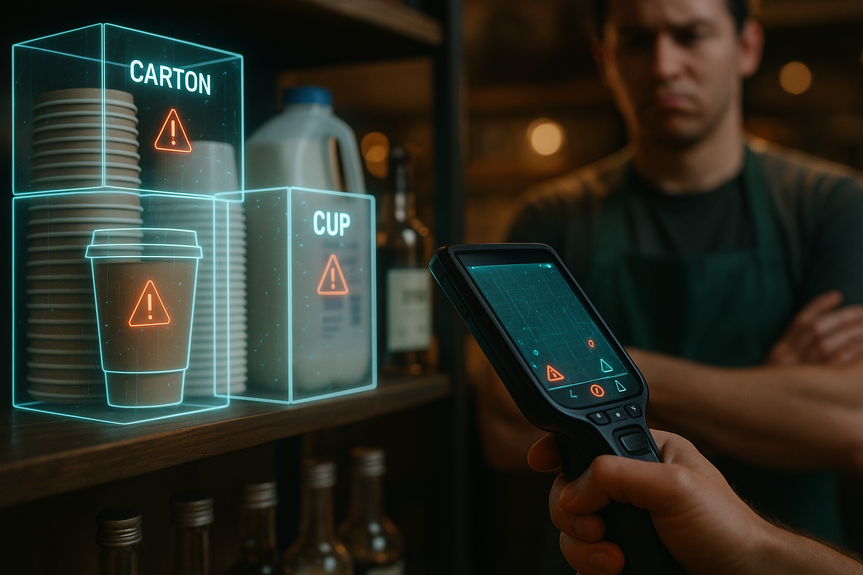
Starbucks ended its AI “Automated Counting” system nine months after launch, per Reuters reporting cited by Gizmodo. The tool, built by NomadGo and marketed with “99% accuracy,” often miscounted or mislabeled items like milk and beverage components. Leadership said stores will return to standard counting, while the company continues to test other forms of AI. Understanding why Starbucks scrapped inventory AI helps retailers avoid the same pitfalls.
It miscounted and mislabeled stock “frequently,” according to Reuters.
It added friction to store operations instead of saving time.
It didn’t handle real shelves, lighting, and packaging changes well.
It lacked trust from staff who must live with the results.
Fallback to manual counting proved more reliable and consistent.
Shadows, glare, and tight spaces confuse cameras.
Similar packaging can trick models (new labels, seasonal SKUs).
Partially used items and odd placements break neat assumptions.
Supply swaps and vendor variations shift the “look” of products.
When a system can’t read a shelf as people do, small errors compound. Miscounts lead to out-of-stocks, over-orders, waste, and frustrated partners who must fix the mess during rushes.
Clear steps for exceptions and partials.
Easy edits when the tool is wrong.
Audit trails to trace who changed what and why.
If those steps are clumsy, staff bypass the tool. Then data quality drops, and forecasts suffer.
Measure the right outcomes. Track waste, out-of-stocks, and partner time saved, not just “accuracy.”
Start small. Pilot in varied stores (high/low traffic, different layouts) for a full season, not a week.
Keep a human in the loop. Let staff review and correct counts fast. Capture those corrections as training data.
Design for edge cases. Handle half-used items, multipacks, substitutions, and seasonal packaging as first-class scenarios.
Build reliable fallbacks. One-tap switch to manual; don’t strand a store when AI stumbles.
Set vendor accountability. Require live dashboards, error reports, and retraining SLAs tied to store outcomes.
Train and listen. Give short, clear training and set weekly feedback loops with store leads.
Protect privacy. Keep any shelf video within policy and minimize what’s saved.
The story of why Starbucks scrapped inventory AI is also a lesson about culture. Tools succeed when they make frontline work easier on day one.
Green Dot Assist, a barista-facing helper for recipes and tasks.
Smart Queue, which sequences orders across channels.
A ChatGPT-powered drink discovery experience for customers.
These tools support people instead of replacing them. That tends to win faster trust.
What is accuracy by SKU in my lighting and layout?
How often are counts off by more than one unit?
What is the false positive rate on lookalike items?
How quickly can the model learn a new package or label?
Demand side-by-side trials against current process with clear baselines.
Map today’s process, timing, and error rates.
Define success: fewer stockouts, less waste, minutes saved per count.
Collect real shelf photos across shifts and seasons for pretesting.
Run AI and manual counts in parallel for four to eight weeks.
Let staff override counts in two taps; log every fix.
Hold weekly huddles; ship model updates mid-pilot.
Greenlight only if store outcomes beat baseline by a clear margin.
Publish a simple playbook: when to trust the tool, when to switch to manual.
Scale in waves, not all at once; keep monitoring and retraining.
Make the tool optional until it proves itself.
Reward accurate counts, not just fast ones.
Share results so teams see the win (or the fix plan).
Why Starbucks scrapped inventory AI: the short version
What went wrong inside the store
Computer vision met messy reality
Process beats product
Even great AI fails without solid workflow. Inventory is not just “scan and done.” Stores need:Trust and change management
When a tool says the milk count is wrong, the person who has to make drinks pays the price. If partners do not trust the number, they won’t use it. Quick rollouts without long, feedback-heavy pilots make this worse.What retailers can learn right now
How Starbucks is still using AI
Starbucks did not reject AI outright. It continues to test:Accuracy claims are not the whole story
Vendors often cite “99% accuracy,” usually measured in clean tests. Stores are not labs. Retailers should ask:A practical rollout blueprint
Before the pilot
During the pilot
After the pilot
Cost, risk, and the frontline
AI that saves five minutes but triggers one stockout is a bad trade. Inventory touches sales, waste, labor, and guest experience. Protect the frontline first:Bottom line
Starbucks’ decision shows that automation must earn its place. The reason behind why Starbucks scrapped inventory AI is simple: the tool could not count well enough in the real world, and that made work harder. Retailers should demand measurable gains, design strong fallbacks, and keep people in control. Get those pieces right, and AI can help—not hinder—the shelf.(Source: https://gizmodo.com/starbucks-abandons-borked-ai-inventory-tool-that-couldnt-count-report-2000762252)
For more news: Click Here
FAQ
Q: Why did Starbucks retire its Automated Counting inventory tool?
A: Starbucks retired the Automated Counting tool because it frequently miscounted and mislabeled basic items, including milk and beverage components, which added friction to store operations instead of saving time. The company ended the system nine months after launch, and that frequent miscounting explains Why Starbucks scrapped inventory AI.
Q: Who supplied the AI inventory system and how was it marketed?
A: The tool was provided by NomadGo, whose CEO David Greschler described it as a “unique synthesis of on-device 3D spatial intelligence, computer vision, and augmented reality.” NomadGo promoted the product with a video claiming 99% accuracy, but Reuters reported frequent miscounts, which helps explain Why Starbucks scrapped inventory AI.
Q: How long was the AI tool in use before Starbucks discontinued it?
A: Starbucks removed the Automated Counting system nine months after it was rolled out in September 2025. The short trial underscores Why Starbucks scrapped inventory AI rather than keeping a tool that stores did not trust.
Q: What specific shelf and vision issues caused the AI to fail in stores?
A: The article lists shadows, glare, tight spaces, similar packaging, partially used items, odd placements, and vendor or seasonal packaging changes as problems that confuse computer vision. Those real‑world shelf variables caused misreads and operational headaches that contributed to the decision to retire the tool.
Q: What did Starbucks tell stores to do after retiring the AI system?
A: Starbucks instructed stores to return to standard manual counting and said beverage components and milk will be counted the same way as other inventory categories. That immediate fallback reflects the practical reasons behind Why Starbucks scrapped inventory AI.
Q: What lessons does the article say retailers should learn from this failure?
A: The article advises retailers to measure the right outcomes (waste, out‑of‑stocks, partner time saved), start small with varied pilots, keep a human in the loop, design for edge cases, and build reliable fallbacks. These recommendations are drawn from the problems that illustrate Why Starbucks scrapped inventory AI and how other stores can avoid the same mistakes.
Q: Did Starbucks abandon AI entirely after this inventory setback?
A: No, Starbucks did not abandon AI; the company continues to test tools like Green Dot Assist for baristas, Smart Queue for order sequencing, and a ChatGPT‑powered drink discovery app. The inventory tool’s retirement was a targeted decision rather than a wholesale rejection of AI.
Q: What rollout practices does the article recommend to prevent similar problems?
A: The practical blueprint recommends mapping current processes, defining success metrics, collecting real shelf photos, running AI and manual counts in parallel for four to eight weeks with easy overrides and logged fixes, and holding weekly feedback huddles. It also advises greenlighting technology only if it beats baseline store outcomes and scaling in waves, which is the playbook to prevent failures like why Starbucks scrapped inventory AI.
Contents