Crypto
20 Jan 2026
Read 12 min
Will Bitcoin collapse after halving Discover the timeframe *
Will Bitcoin collapse after halving, Justin Bons outlines a 7-11 year timeline to help investors hedge
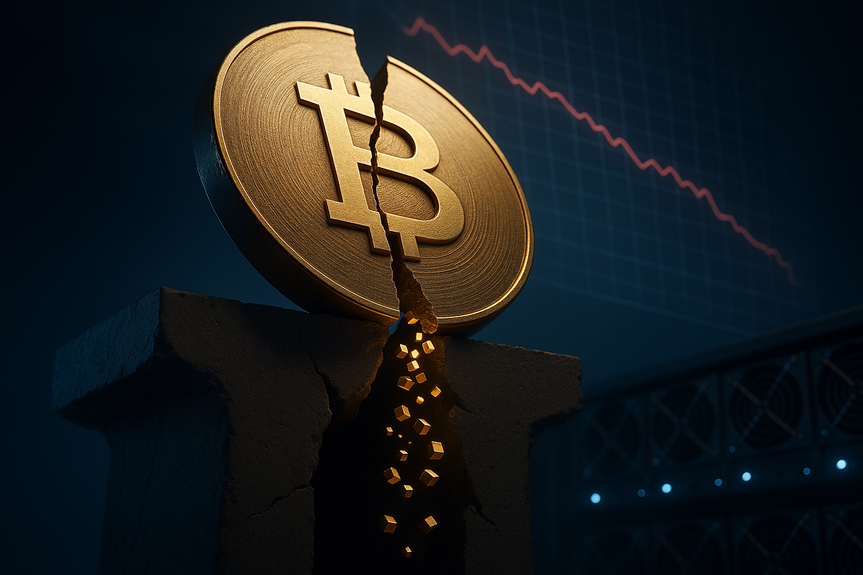
Will Bitcoin collapse after halving? An industry CIO says yes—within 7 to 11 years—if miner rewards keep shrinking and fees or price do not fill the gap. His warning centers on a falling “security budget” that could make attacks cheaper than the potential rewards from breaking the network.
Bitcoin halves its block rewards roughly every four years. That design limits supply and has fueled many rallies. But it also cuts what miners earn for securing the network. Justin Bons, founder and CIO of CyberCapital, argues that this slow squeeze creates a growing security hole that the market may not fix on its own.
Will Bitcoin collapse after halving?
Bons’ case is simple: when rewards shrink every halving, the money miners earn goes down unless fees or price rise fast enough. If miners earn less, attackers need less money to outspend honest miners. Over time, the cost of a long attack could fall below the potential profit from the attack. His timeline—seven to 11 years—matches two to three halving cycles. In that window, he believes the network’s security budget could drop to a level where a well-financed attacker sees a clear path to profit. He points to a key risk: double-spend attacks against exchanges that accept deposits and allow quick withdrawals.Why shrinking rewards matter
Security budget, not hashrate, pays for safety
People often cite the rising hashrate as proof that Bitcoin is safe. Bons pushes back. He notes that hashrate can rise even if real security falls. New mining hardware gets faster and cheaper per hash. What truly matters is how many dollars miners earn and spend to secure the chain. That total spend is the “security budget.” If the security budget drops, attackers need less money to control enough hashpower for long enough to cause damage. The trend Bons highlights is this: miner revenue per block tends to drop over time unless fees or price offset each halving. That makes the margin for safety thinner with each cycle.Math that strains the limits
To keep today’s security level without growing fees, Bitcoin’s price would need to double roughly every four years, and keep doing so for many cycles. Bons argues this pace would soon run into real-world limits, because markets and the global economy cannot absorb exponential growth forever. The other path—very high fees—could push users away from the base chain and reduce activity.The attack scenario he fears
Double-spends against exchanges
The most likely target is not everyday users. It is centralized venues that take deposits and enable fast trading. An attacker who controls over 51% of hashpower could deposit BTC, trade it for another asset, withdraw that asset, and then reorg the chain to erase the original BTC deposit. If the profit beats the cost of the attack, the attack makes economic sense.Why the risk grows with time
– Miner payouts fall after each halving. – If price and fees do not rise enough, miner revenue declines. – With lower revenue, the cost to outspend honest miners falls. – Attacks against deep liquidity venues can be lucrative. – At some point, rewards can exceed costs, inviting attempts. Bons also notes that Bitcoin’s security budget, relative to its total market value, has trended down for years. A larger market cap does not automatically mean a safer chain if the dollars per block paid to miners do not keep pace.How the next two to three halvings could play out
Bons places his “break point” in two to three halvings. That equals about seven to 11 years. If fees stay modest and price growth slows, the security budget could drop to where a long reorg attack becomes feasible. The attack would not need to last forever. It would only need to last long enough to exploit exchanges and cash out. Will Bitcoin collapse after halving in this window? Bons argues the risk becomes real, not theoretical. He frames it as a gradual slide, not a sudden crash. Each halving lowers the cushion, and the market must work harder to fill the gap.Possible responses—and tradeoffs
Higher on-chain fees
A simple fix is higher fees. If users pay more per transaction, miners earn more, and security improves. But high fees can drive users away from the base chain. Some activity may move to layers built on top of Bitcoin. Those layers help scale usage, but they do not fully solve base-layer security if miners still earn too little.Endless price growth
Relentless price doubling every four years would also raise miner income. Yet it is risky to assume endless exponential growth. Markets cycle. Liquidity changes. Macro conditions shift. Even strong adoption cannot guarantee the exact path the network needs to fund security forever.Protocol change: new issuance
Another option would be to add a “tail emission” or raise the 21 million cap to keep miners paid. Bons notes this could split the community. Some holders value the hard cap above all else. Changing it could trigger a chain split, which would create a new asset and leave deep uncertainty.Operational defenses
Exchanges can increase confirmation requirements. They can delay withdrawals. They can watch for deep reorgs and adjust risk systems. These steps raise the cost and complexity of attacks. They do not, however, increase the base-layer security budget. They only make the attack harder to pull off in practice.Counterpoints from Bitcoin supporters
Supporters argue that: – Market incentives will adjust. If security weakens, fees will rise. – Layered design can handle high fees by shifting many transactions off-chain. – Mining competitiveness and corporate investment raise barriers to 51% control. – Social and economic responses (like stricter exchange policies) can deter attacks. These points may slow or block the doom path. But they rely on behavior and market dynamics that are not guaranteed. Bons’ warning is that incentives, not hope, must carry security.Reading the signals that matter
Instead of watching hashrate alone, track the dollars miners earn per block from rewards plus fees. Then compare that with: – The cost of renting or acquiring enough hashpower to attack. – The potential profit from attacking large venues. – The share of miner revenue that comes from fees versus block subsidy. If fees become a bigger slice of miner revenue over time, and total miner income holds steady or grows, the network can sustain security past future halvings. If not, the cushion keeps shrinking.What users and investors can do now
– Watch miner revenue trends, not just price or hashrate. – Favor exchanges that use more confirmations and strong withdrawal controls. – Use cold storage for long-term holdings to lower counterparty risk. – Understand that very low fees may signal weak miner incentives. – Expect debates about fees, scaling, and possible protocol changes to intensify as halvings continue.Bottom line: risk is a function of incentives
Bons’ view is stark but clear: if miner payouts keep falling and fees or price do not fill the gap, the economic cost of attacks falls. At some point, the math can favor attackers. Will Bitcoin collapse after halving in the next decade? Not if incentives adjust fast enough. But if they do not, the risk he outlines becomes more than theory. The path forward depends on how users, miners, builders, and markets respond to each halving from here.(Source: https://bitcoinist.com/industry-expert-predicts-complete-bitcoin-collapse-heres-the-timeframe/)
For more news: Click Here
FAQ
Q: Will Bitcoin collapse after halving?
A: Justin Bons warns it could within seven to 11 years if miner rewards continue to shrink and neither transaction fees nor price growth offset the falling block subsidies. He ties that timeframe to two to three more halvings when the security budget might drop enough to make long attacks economically attractive.
Q: What does Justin Bons cite as the main cause of the collapse risk?
A: Bons points to shrinking miner payouts from repeated halvings that reduce the network’s “security budget” unless fees or price rise to compensate. He stresses that dollar-denominated miner revenue, not just hashrate, determines how costly an attack would be.
Q: How do halvings affect miner revenue and network security?
A: Halvings cut block rewards by about 50% roughly every 210,000 blocks, or about every four years, which lowers miner subsidies unless fees or price offset the decline. Over time that reduction can shrink the dollars miners earn per block and weaken the economic barrier to attacks.
Q: Why does Bons say hashrate can be misleading as a security measure?
A: He argues hashrate can increase even while real security weakens because newer hardware makes hashes cheaper and faster, so the key metric is how many dollars miners actually earn. If miner revenue falls, the cost to rent or acquire sufficient hashpower for an attack also falls.
Q: What specific attack scenario is Bons most concerned about?
A: Bons highlights 51%-style double-spend attacks against exchanges, where an attacker deposits BTC, trades for another asset, withdraws funds, and then reorgs the chain to erase the original deposit. He warns such attacks become economically attractive if the cost of sustaining them falls below the expected profit.
Q: Could higher fees or steady price growth prevent the risk Bons describes?
A: Higher on-chain fees or sustained price growth could maintain miner income and the security budget, but Bons says the required price trajectory or fee levels are unrealistic long-term. Extremely high fees could drive users to off-chain layers and repeated exponential price growth would strain real-world limits.
Q: What protocol changes are proposed to address falling miner incentives, and what are the tradeoffs?
A: One proposal is adding a tail emission or raising the 21 million supply cap to keep miners paid, but Bons notes such moves would likely split the chain and create a new asset. That tradeoff risks deep community division and significant uncertainty about the network’s future.
Q: What steps can users and exchanges take now to reduce practical risk from weaker miner income?
A: Users and investors should watch miner revenue trends, favor exchanges that require more confirmations and strong withdrawal controls, and use cold storage for long-term holdings to lower counterparty risk. Exchanges can delay withdrawals and monitor for deep reorgs to raise the cost of attacks, though these measures do not increase the base-layer security budget.
* The information provided on this website is based solely on my personal experience, research and technical knowledge. This content should not be construed as investment advice or a recommendation. Any investment decision must be made on the basis of your own independent judgement.
Contents