AI News
11 Mar 2026
Read 12 min
How to spot deepfake job applicants and stop fraud
how to spot deepfake job applicants fast and tighten hiring checks to prevent fraud and data breaches.
Learn how to spot deepfake job applicants with fast checks that catch fake photos, voices, and IDs. Use live video with liveness prompts, reverse image searches, document validation, and sanctions screening. Verify real work history and devices. This guide lists clear signs, simple tests, and steps your HR and IT teams can use today.
Microsoft says North Korean-linked groups now use AI to pass remote hiring screens and get paid by Western firms. They create fake photos and Western names, swap faces into stolen IDs, and use voice changers in interviews. They scan job boards, tune resumes with AI, and even use AI to write code and emails once hired.
Some workers then send wages back to the state, and a few threaten to leak data when fired. Microsoft says it disrupted roughly 3,000 Outlook and Hotmail accounts tied to these schemes. If you know how to spot deepfake job applicants, you cut risk, protect data, and keep teams safe.
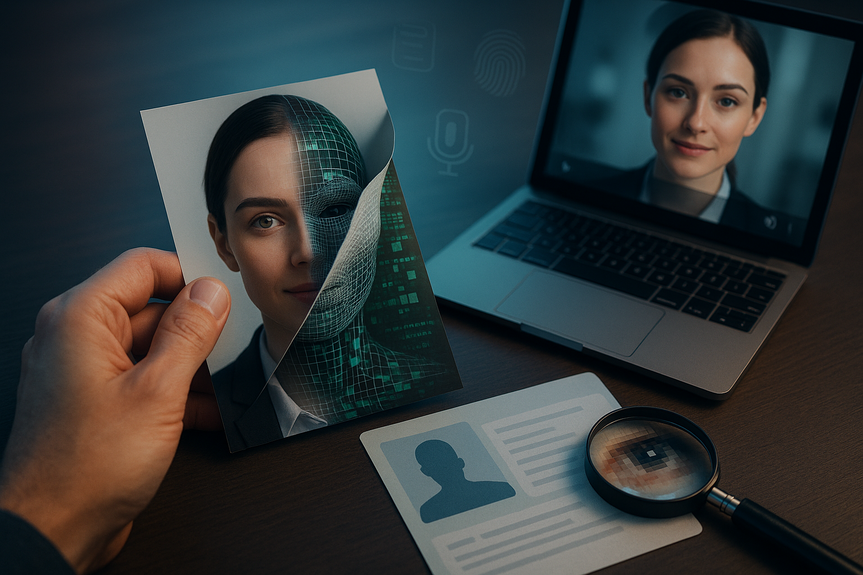
Run a reverse image search on the headshot. Look for stock photo hits, repeats across profiles, or AI-style faces with odd ears, hair edges, or mismatched earrings.
Zoom in on the photo. Watch for pixel halos around the face, smeared glasses, or strange lighting on skin that does not match the background.
Check resume facts. Call listed employers, verify dates, and confirm job titles. Cross-check LinkedIn and GitHub histories for gaps or sudden skill jumps.
Look at contact patterns. Brand-new emails, mismatched names across documents, or changing time zones can signal risk.
Screen for sanctions and watchlists. Run OFAC, UN, and local checks where legal before moving forward.
Use high-quality video. Ask the person to turn their head side to side, touch their ear, and show both hands. Deepfakes often lag or blur on quick movements.
Ask for natural lighting. Irregular light on the face or sharp edges around hair may expose fake video.
Listen for voice drift. Voice changers can slip on tricky words. Have the candidate read a short, uncommon sentence and count backward from 20.
Check lip sync. Words that do not match mouth shapes, or audio that drifts out of sync, are red flags.
Do a live ID match. Ask them to hold their government ID next to their face, then tilt both under the same light. Compare fonts, photo placement, and holograms.
Request a real-time task. Have them share their screen and complete a small coding or writing task. Watch for copy-paste from prewritten answers.
Run a short, paid trial with screen sharing. Test core skills in your stack, not generic tasks.
Check code or writing style across samples. Compare with their portfolio or Git history. Large swings in style can be a clue.
Ask for explanations. A true author can explain design choices, trade-offs, and error messages they met during the task.
Remote hiring is fast, and identity checks are often light.
AI can generate faces, names, and resumes that fit a job post within minutes.
Voice tools can mask accents during video calls.
AI can draft emails, translate text, and even write code, which helps fake workers stay hidden.
Attackers scan platforms like freelance job boards for roles they can hit at scale.
Ask for a second, live video call before the offer. Use different prompts to prevent rehearsed answers.
Use document verification with liveness checks where legal. Compare MRZ/barcode data with the printed fields.
Match legal name to bank account and tax records where allowed. Avoid paying through third parties.
Check device and network traits. Note IP country, VPN/proxy use, and time zone mismatches during calls and trials.
Require company email and security training before giving access to any sensitive system.
Keep an auditable trail. Store interview recordings and identity checks following privacy laws.
Ask the candidate to write today’s date and their name on paper and hold it up.
Have them switch camera angles or move to a different room light.
Ask them to close and reopen one eye, then smile and frown. Deepfakes often struggle with asymmetric actions.
Pair program or co-write in a shared doc with no time to consult external tools.
Introduce a small bug and ask them to debug live. Real skill shows in how they locate and fix it.
Ask scenario questions tied to their claimed past projects. Ask “why” three times to test depth.
Grant least-privilege access. Use just-in-time access for prod and revoke the moment work ends.
Enforce phishing-resistant MFA (security keys). Block legacy protocols.
Log code pushes, data downloads, and unusual file transfers. Set alerts for large exports.
Use DLP and secrets managers. Rotate keys often. Stop copy/paste from sensitive apps where possible.
Require peer reviews and mandatory vacations for critical roles to expose hidden misuse.
Have a rapid offboarding plan. Remove accounts and tokens within minutes if risk rises.
Headshots that look “too perfect,” with plastic-like skin or soft halos around hair.
Voices that crackle on certain words, or accents that drift during longer answers.
Refusal to join video, show ID on-cam, or do live tasks.
Use of intermediaries for pay or communication.
IPs that jump countries between interviews and trials.
Threats or pressure after rejection, including hints about your data.
Freeze access fast. Lock accounts, revoke tokens, and rotate secrets.
Preserve evidence. Save logs, emails, and recordings. Do not tip off the suspect.
Alert legal, HR, and security. Follow local labor and privacy laws.
Notify platforms and, if needed, authorities. Consider sanctions obligations.
Review recent code, data access, and file shares. Remove any backdoors or rogue tools.
Improve your process. Add new checks to job posts, screenings, and trials.
Hold a 30-minute workshop each quarter on visual and audio deepfake signs.
Share a simple checklist for recruiters and hiring managers.
Run mock interviews to practice liveness prompts and live tasks.
Create an escalation path so staff can flag doubts without fear.
Remind teams why this matters: data safety, brand trust, and legal duty.
Knowing how to spot deepfake job applicants is now a core hiring skill. With live video checks, smart document and device screening, and safer trials, you can block fake identities, protect your systems, and hire real talent with confidence.
(p)(Source: https://www.ndtv.com/world-news/north-korean-agents-using-ai-tools-to-trick-western-firms-into-hiring-them-11181812)(/p)
(p)For more news: Click Here(/p)
How to spot deepfake job applicants
Before the interview: profile checks
During the interview: live tests
After the interview: work proof that is hard to fake
Why this scam works
Stronger identity checks that scale
Safer interviews and trials
Simple liveness prompts
Skill validation that resists AI help
Protect your systems after hiring
Red flags you should not ignore
What to do if you suspect fraud
Train your team, lower your risk
FAQ
Q: What are common red flags that suggest a job applicant might be a deepfake?
A: Knowing how to spot deepfake job applicants, watch for headshots that look “too perfect” with plastic-like skin, soft halos around hair, unusual pixelation, or lighting that doesn’t match the background. Also note voices that drift on certain words, accents that change during longer answers, refusal to join video or show ID, use of intermediaries, or IPs that jump countries during interviews.
Q: How should I check a candidate’s photo and online profiles before interviewing?
A: Run a reverse image search on the headshot to find stock photos or repeats across profiles, and zoom in to look for pixel halos, smeared glasses, or mismatched earrings. Cross-check resume facts with LinkedIn and GitHub for gaps or sudden skill jumps and verify contact patterns like brand-new emails or mismatched names.
Q: What live video techniques reveal deepfakes during interviews?
A: Use high-quality video and ask liveness prompts such as turning the head, touching an ear, showing both hands, and switching camera angles because deepfakes often lag or blur on quick movements. Have candidates read an uncommon sentence or count backward to catch voice changers, check lip sync, and do a live ID match under the same light to compare fonts and holograms, which demonstrates how to spot deepfake job applicants in practice.
Q: How can document verification and sanctions screening help stop fake applicants?
A: Use document verification tools with liveness checks and compare MRZ or barcode data to printed fields while inspecting photo placement, fonts, and holograms for inconsistencies. Screen candidates against OFAC, UN, and local watchlists where legal to catch applicants tied to sanctioned groups before progressing in hiring.
Q: Which practical tests can prove a candidate’s real skills and resist AI assistance?
A: Run a short paid trial with screen sharing that tests core skills in your stack, use live tasks like pair programming or debugging in a shared doc, and compare code or writing style across samples to spot large swings. Ask scenario questions tied to past projects and require explanations of design choices to verify authorship, which helps when learning how to spot deepfake job applicants beyond just visual and audio checks.
Q: What network and device signals should recruiters monitor for fraud?
A: Check IP country, VPN or proxy use, and time zone mismatches during calls and trials, and note if devices or networks change between interviews, which can indicate intermediaries or location-hopping. Also require company email and security training before granting access to sensitive systems to reduce the risk of remote fraud.
Q: What immediate actions should an employer take if they suspect a hired worker is a deepfake or part of a scam?
A: Freeze access quickly by locking accounts, revoking tokens, and rotating secrets, and preserve evidence like logs, emails, and recordings without alerting the suspect. Notify legal, HR, and security teams, inform platforms or authorities as needed, and review recent code and data access for backdoors or rogue tools.
Q: How can companies scale safer hiring practices to prevent this kind of fraud across many roles?
A: Implement a second live video call with different prompts before offers, use document verification with liveness checks where allowed, and keep an auditable trail of identity checks and recordings following privacy laws. Require least-privilege access, phishing-resistant MFA, DLP and secrets managers, and periodic training and mock interviews so teams learn how to spot deepfake job applicants and respond quickly.
Contents