AI News
07 Jun 2026
Read 8 min
Utah Google Gemini adoption 2026: How schools benefit
Utah Google Gemini adoption 2026 equips 680,000 students and 28,000 teachers with secure personal AI.
Utah Google Gemini adoption 2026 puts safe, school-managed AI tools in reach for public schools starting in the 2026–27 year. Students and teachers can brainstorm, practice skills, and get clear explanations, while districts keep local control. The plan includes privacy protections, educator training, and free AI courses to help classrooms use AI well.
Utah’s State Board of Education has approved Google’s Gemini for Education for K-12 schools. Districts and charters can choose whether to use it. About 680,000 students and 28,000 educators will gain access to AI tools meant to support teaching and learning in a secure domain. The state says data from school chats will not train AI models.
What the Utah Google Gemini adoption 2026 means for classrooms
Who gets access and when
Starting in the 2026–27 school year, schools will be able to turn on Gemini for Education. Local education agencies decide how, or whether, to use it. This approach lets each community set the pace. As districts consider the Utah Google Gemini adoption 2026, they can pilot tools, gather feedback, and scale what works.Privacy and safety first
The state says all use will happen inside a secure, school-managed domain. Conversations and files will not train AI models. This aligns with House Bill 273, which asks districts to review AI tools for privacy and security. USBE will help schools screen software and set clear rules for safe use.How teachers will save time and teach better
Planning and feedback made easier
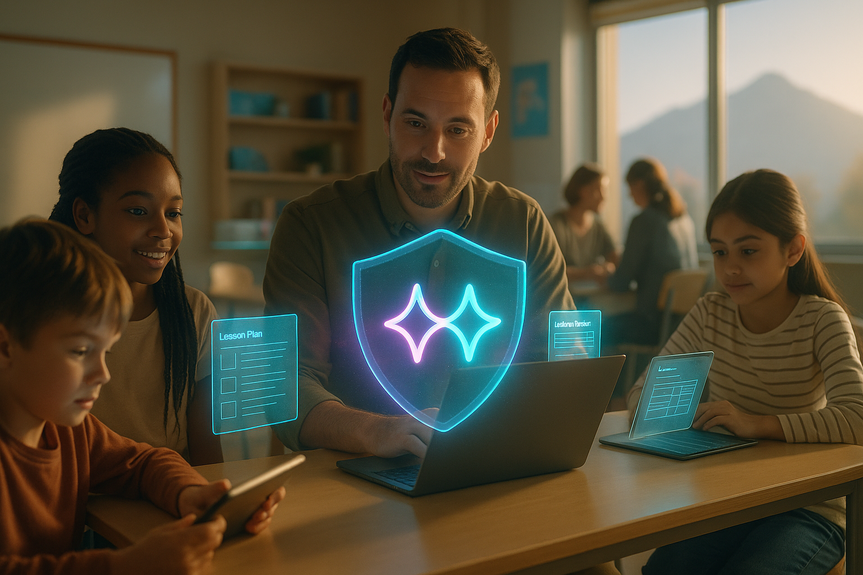
Teachers can use Gemini to handle routine tasks and focus more on students. Key benefits include:- Create lesson plans that match standards and class goals
- Build grading rubrics and assignment checklists
- Summarize classroom discussions to capture key points
- Draft practice sets that match different skill levels
Student learning boosts
Practice that fits each learner
Students can get practice exercises that match their learning speed and needs. This work supports, not replaces, teacher-led instruction. Kids can also ask for step-by-step explanations when they get stuck, so they stay engaged and keep moving.Inquiry, research, and checking facts
Students can use AI to brainstorm ideas, plan projects, and explore topics. Schools will teach students how to verify sources and question AI answers. This builds research habits and digital citizenship. It also helps students prepare for jobs that already use AI tools every day.Training and support statewide
Professional learning and free courses
Google will run training sessions for educators across Utah. These sessions show teachers how to use Gemini safely and well. In addition, the state will offer AI courses to students and educators at no cost through December 2027. The Utah Google Gemini adoption 2026 rollout gives schools time, guidance, and structure to build strong classroom routines.Local control with clear guardrails
District choice, consistent expectations
USBE stresses local control. Districts and charters can adopt, limit, or pause use based on community needs. The state sets guardrails for privacy and ethics, while schools set classroom rules. Some devices, such as AI glasses, may face limits or bans under separate proposals. This rollout focuses on software inside managed school accounts.What students will actually do with Gemini
Everyday classroom use cases
Expect short, guided moments rather than all-day AI use:- Warm-up questions with instant feedback
- Idea maps for writing or science projects
- Reworded explanations of tough concepts
- Study guides from class notes and readings
- Exit tickets that summarize what students learned
How families can prepare now
Simple steps at home
- Talk about AI as a helper, not a shortcut
- Practice fact-checking with trusted sources
- Ask teachers about class rules for AI use
- Learn basic privacy habits: never share personal details
- Watch for the state’s free AI courses and try them together
What success will look like
Clear goals and honest reflection
Schools can track success by looking for:- More time for small-group teaching and feedback
- Faster lesson planning and grading prep
- Better student explanations and revised drafts
- Fewer tech risks and clear behavior norms
(Source: https://kutv.com/news/education/utah-schools-to-adopt-gemini-ai-tools-for-students-educators)
For more news: Click Here
FAQ
Q: What is the Utah Google Gemini adoption 2026?
A: The Utah Google Gemini adoption 2026 refers to the Utah State Board of Education’s approval of Google’s Gemini for Education for use in public K-12 schools. It is an AI assistant available to educators, students, and staff designed to support instruction beginning in the 2026–27 academic year.
Q: When will schools be able to implement Gemini for Education under the Utah Google Gemini adoption 2026?
A: Use of Gemini for Education can begin in the 2026–27 school year, and local education agencies retain full discretion over whether to implement the tools. Districts can pilot the technology, gather feedback, and scale what works based on local needs.
Q: Who will have access to Gemini if local districts choose to adopt it?
A: If districts adopt the tools, roughly 680,000 K-12 students and 28,000 K-12 educators in Utah will have access to Gemini for Education. Local education agencies decide how, or whether, to implement the tools in their schools.
Q: How does the plan address privacy and data use concerns?
A: The state says all interactions with Gemini for Education will occur within a secure, school-managed domain and that conversations and data will not be used to train AI models. The rollout aligns with House Bill 273 and USBE will help districts screen software for security and privacy.
Q: What training and resources will be available to teachers and students during the rollout?
A: Google will provide training sessions for educators across the state, and the state will offer AI courses to students and educators at no cost through December 2027. USBE also plans to provide resources to help districts navigate AI safely and effectively.
Q: How can Gemini help teachers save time in planning and grading?
A: Teachers can use Gemini to generate lesson plans, develop grading rubrics, summarize classroom discussions, and create practice exercises tailored to student needs. These uses are intended to save time while supporting more efficient instruction.
Q: What are typical classroom uses students might see with Gemini?
A: Typical short, guided uses include warm-up questions with instant feedback, idea maps for projects, reworded explanations of difficult concepts, study guides from class notes, and exit tickets. Teachers remain in charge of when and how students use AI and will review work for quality and honesty.
Q: How can families prepare for the Utah Google Gemini adoption 2026?
A: Families can prepare by talking about AI as a helper rather than a shortcut, practicing fact-checking with trusted sources, and asking teachers about classroom rules for AI use. They should also reinforce basic privacy habits like not sharing personal details and watch for the state’s free AI courses.
Contents