Adobe Firefly audio for creators generates licensed speech, music and effects so you can publish them.
Adobe Firefly audio for creators lets you make speech, background music, and sound effects with a universal license you can actually use. It focuses on instrumental tracks and expressive voices, not full AI songs. You can score videos, add emotions and pronunciations, translate lines, and publish without copyright stress.
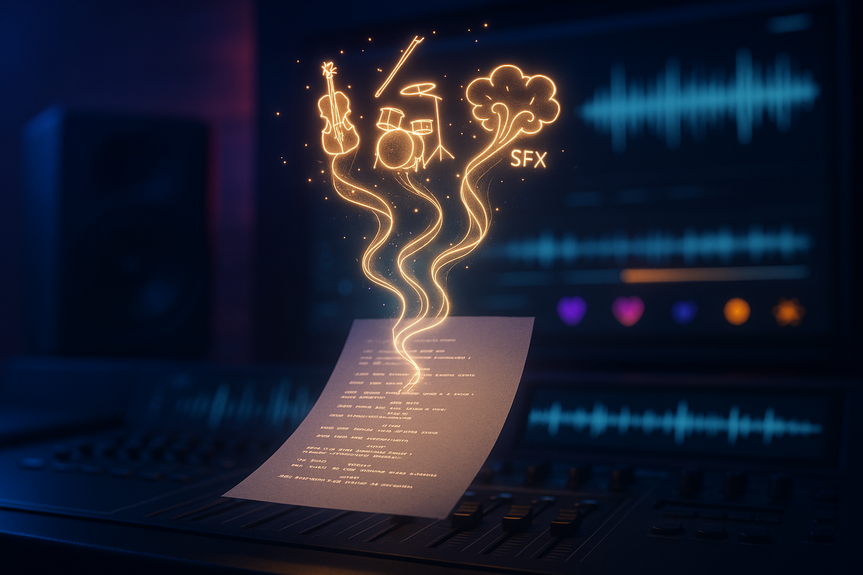
Adobe has released new Firefly tools that create speech, music, and sound effects for video, podcasts, games, and social posts. The tools live in the Firefly hub and integrate with Creative Cloud. Generations use your plan’s generative credits. A Firefly-only plan starts at $10 per month. The music is instrumental and comes with a universal license for commercial use.
What is Adobe Firefly audio for creators?
It’s a set of AI audio tools built for practical, professional use. You can:
Turn a written script into speech with multiple voices, ages, and styles
Generate instrumental background music by mood, genre, and scene
Create or transform sound effects that sync to your video
The aim is speed, control, and legal safety for creators who need publishable audio, fast.
Key features that matter on deadline
Speech that sounds expressive
Upload your script and pick a voice; adjust style with emotion tags like calm, excited, or serious
Translate to 20+ languages
Add pronunciation guides for names and brands (e.g., “Shed-rao-wee”)
Instrumental music you can publish
Use a simple prompt: vibe, genre, and use case (e.g., “dreamlike, electronic ambient for a video game”)
Optionally upload a video; Firefly drafts a prompt and generates four 30-second candidates to match the scene
All music is instrumental, built for background scoring and looping
Sound effects that sync
Describe the effect or upload a rough recording; Firefly reshapes it (your growl becomes a dinosaur roar)
Timing aligns to the picture to speed up editing
Legal use and licensing made simple with Adobe Firefly audio for creators
Universal license included for Firefly-generated music and other audio assets, so you can use them across commercial projects, social posts, and client work
Safer publishing: platforms often flag copyrighted tracks; Firefly’s license lowers takedown risk
Use content you own: only upload scripts, recordings, or video you have rights to
Follow platform rules: label AI audio if Spotify, YouTube, or others require it
Avoid impersonation: do not mimic real people’s voices or imply endorsements
Keep records: save prompts, timestamps, and export metadata for client and platform audits
Adobe says its models train on licensed and public content, and not on customers’ private work. Still, you are responsible for how you use outputs, so stick to the above guardrails.
Costs, access, and limits
Access the tools in the Firefly hub; many Creative Cloud plans include Firefly
Generations use your account’s generative credits; watch your usage on large projects
Firefly-only plan starts at $10/month
Video-driven scoring creates up to four 30-second samples per pass; iterate to refine longer cues
Fast workflow: from script to publish in under an hour
Plan the sound: What mood, tempo, and moments need emphasis?
Generate speech: Upload your script, set emotion tags, add pronunciation, and export WAV/MP3
Build the soundtrack: Prompt for genre and vibe; iterate until your timing and energy match
Add sound effects: Prompt or upload a rough take; align to on-screen actions
Mix and balance: Level speech first, tuck music under dialogue, spot SFX for clarity
Export with metadata: Note that music is Firefly-generated under a universal license
Check platform policies: Add AI labels if required; test loudness and playback
Archive assets: Save prompts, versions, and license notes for future edits
Where AI audio fits in real projects
Adobe Firefly audio for creators helps with short-form videos, YouTube intros, indie game loops, ads, training modules, and rapid concept pitches. Surveys cited by Berklee’s Emerging Artistic Technology Lab show many creators already use generative tools during production, and a good share publish with AI audio in final cuts.
Limits and best practices
It’s not a full-song generator; music is instrumental by design
Use emotion tags in speech to avoid robotic tone
Write clear prompts: vibe + genre + role in the scene (e.g., “low-key tension bed under dialogue”)
Iterate quickly: short generations help you test several directions
Don’t chase another artist’s exact style; aim for mood, not mimicry
Always confirm rights to anything you upload (scripts, temp VO, field recordings)
Adobe Firefly audio for creators gives you speed, control, and licensing confidence. You can craft expressive speech, safe background music, and synced effects without stalling your edit or risking takedowns. Start with tight prompts, use emotion tags, and export with license notes—then publish with less friction and more creative focus.
(Source: https://www.cnet.com/tech/services-and-software/adobe-ai-audio-soundtrack-music-speech-general-release-2026/)
For more news: Click Here
FAQ
Q: What is Adobe Firefly audio for creators?
A: Adobe Firefly audio for creators is a set of AI tools that generate speech, instrumental background music, and sound effects for video, podcasts, games, and social posts. It’s built for practical, professional use with features like expressive voices, prompt-driven music, and a universal license for generated audio.
Q: How do I create speech with Firefly’s AI audio tools?
A: Upload your script, choose from several artificial voices across genders and ages, and use emotion tags to control expressiveness. You can also add pronunciation guidance and translate the audio into over 20 languages.
Q: Can I use the generated music commercially?
A: Yes, audio produced by Adobe Firefly audio for creators is automatically granted a universal license so you can use music and other generated audio across commercial projects and social posts. You should still follow platform rules like labeling AI audio if required and avoid using uploads you don’t have rights to.
Q: What types of music can Firefly generate and how long are the samples?
A: Firefly focuses on instrumental background music rather than full songs, using a fill-in-the-blank prompt format to set vibe, genre, and situation. If you upload a video, the AI can draft four candidate audio tracks up to 30 seconds each to match the scene.
Q: How do sound effects work in Firefly?
A: Describe the desired effect or upload a rough recording, and the AI will reshape your input, for example turning a human roar into a dinosaur-like sound, and sync it to the video. This alignment helps speed up editing by matching SFX timing to on-screen actions.
Q: How do pricing and generative credits work for Adobe Firefly audio for creators?
A: Access is available through the Firefly hub and may be included in certain Creative Cloud plans, while AI audio generations count against your account’s generative credits. Adobe also offers a Firefly-only subscription starting at $10 per month for standalone access.
Q: Does Adobe train its audio models on customer content or public data?
A: Adobe says its models are trained on licensed and publicly available content and that it does not train on customers’ private work. Users are still responsible for how they use outputs and should confirm rights to any scripts or recordings they upload.
Q: What best practices should creators follow when using Adobe Firefly audio for creators?
A: Write clear prompts (vibe + genre + role), use emotion tags and pronunciation guidance to avoid robotic or incorrect audio, and iterate with short generations to refine direction. Also archive prompts and export metadata, avoid impersonating real people, and check platform policies about labeling AI audio before publishing.