AI News
25 Apr 2026
Read 11 min
AI clean room legality: How to assess legal risks
AI clean room legality explained to help developers spot risks and protect open source projects today.
AI clean room legality asks if you can rebuild software with AI, match its function, and avoid prior licenses without copying code. This guide explains how classic clean rooms worked, why AI changes the calculus, key legal risks beyond copyright, and a practical checklist to gauge exposure before you ship.
A new wave of tools promises “from-scratch” clones of open source projects, often packaged as satire but fully operational. They split work into two steps: one agent writes specs after reading the target, another produces new code from those specs. The goal is a clean room that dodges license carryover, attribution, and copyleft duties. The stakes are high for open source and for companies betting on AI rewrites.
License carryover: If the new code is derivative or contains copied fragments, original licenses may still apply.
Training contamination: The model may regurgitate protected code it saw during training.
Trade secrets: If the target included non-public information, reverse engineering can trigger trade secret claims.
Patents: Clean rooms do not avoid patent infringement; functional claims can still bite.
DMCA/anti-circumvention: Bypassing technical measures can create separate liability.
Jurisdictional twists: Database rights (EU), moral rights, and differing views on AI authorship raise cross-border risk.
Consumer and security law: Shipping a brittle clone with vulnerabilities can invite regulatory and contractual trouble.
Define scope: List features to match and those you will not replicate. Avoid one-to-one structure or comments.
Separate roles: Use a “reader” to write high-level specs and a “builder” who never sees source code. Keep logs.
Harden prompts: Instruct the model to avoid verbatim text, unique identifiers, and rare code patterns.
Scan for similarity: Run multiple diff and clone-detection tools (e.g., token and AST-based) against the original and dependencies.
Review licenses: Map all inputs and outputs. If any overlap suggests derivation, honor the strictest applicable license.
Document provenance: Keep design docs, prompts, model versions, seeds, and decision records. Export an SBOM for the new code.
Security check: Run SAST/DAST, dependency auditing, and CVE monitoring; do not ship a snapshot with no maintenance plan.
Independent code review: Human reviewers should certify no literal copying, and note meaningful structural differences.
Patent search: Do a targeted freedom-to-operate review for core functions.
Legal sign-off: Get counsel to validate the process and evidence chain before release.
Assign a “dirty” specs team and a “clean” build team. Enforce access controls.
Train engineers on license basics, derivative risk, and when to escalate.
Use written functional specs, not low-level design that mirrors the source.
Mandate code provenance notes in every pull request.
Adopt a maintenance plan: patch cadence, owner rotation, and CVE response SLAs.
Model controls: Prefer models with enterprise data controls; disable training on your prompts/outputs.
Similarity gates: Block merges if similarity scores exceed thresholds.
Policy as code: Enforce license-compliance rules in CI, including attribution when required.
Emerging cases: Disputes over AI “rewrites” of popular libraries test how courts see derivation and license scope.
Commercial tools: New services promise “license-free” clones; their processes will face scrutiny.
Policy shifts: Regulators are probing training data, model provenance, and AI output ownership across regions.
Verbatim or near-verbatim code blocks, comments, or tests.
Replicated quirks: identical bugs, unique variable names, or idiosyncratic formatting.
Insufficient logs: no auditable trail of separation between reading and building.
Security gaps: known CVEs with no patch plan or owner.
Patent alerts: credible claims on core methods or data flows.
Explain the business goal: speed and license clarity.
Map the risk categories: copyright, license, patents, security, reputation.
Show the controls: separation, scanning, provenance, and legal review.
Commit to maintenance: budget, team, and SLAs for long-term support.
Offer plan B: comply with original license or partner upstream if risk remains high.
A smart team treats AI clean room legality as a process problem, not a shortcut. Prove separation, avoid copying, maintain security, and respect upstream communities. When in doubt, comply with the original license or contribute back. The fastest path to court is a clone you cannot defend—or maintain.
(Source: https://www.404media.co/this-ai-tool-rips-off-open-source-software-without-violating-copyright/)
For more news: Click Here
What a clean room meant then—and now
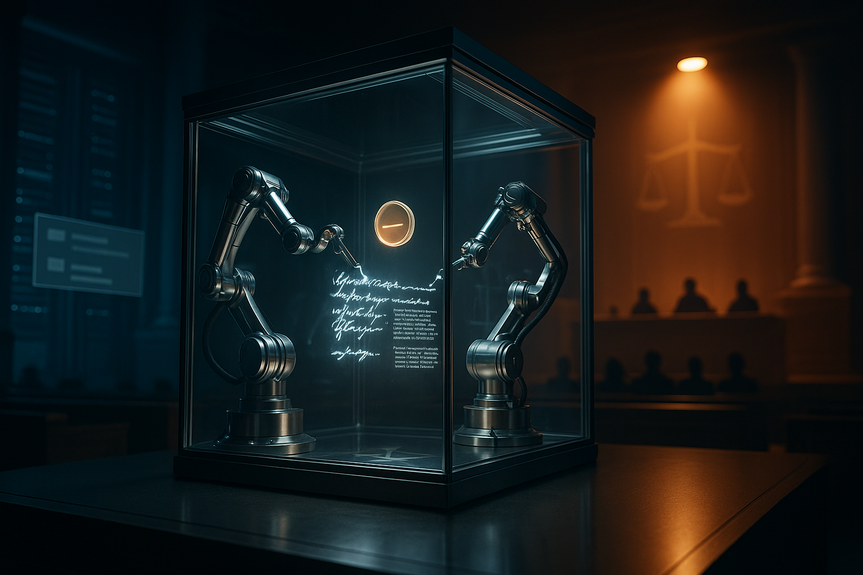
In the 1980s, a clean room used two separated teams. One read a system, wrote neutral specs, and walled off. A second team, with no exposure to the original code, built a compatible product from the specs. Courts often saw this as new authorship, not copying. AI collapses time and cost. One model derives specs, another writes code. That speed does not remove risk. Similarities can appear, training data can contaminate output, and other rights beyond copyright still apply.Understanding AI clean room legality
Copyright protects original expression, not ideas or functionality. A true clean room build that avoids literal copying may pass a core copyright test. But AI adds wrinkles: – Models trained on public code may reproduce licensed snippets. – Some regions question whether AI outputs are copyrightable at all. – Licenses aimed at reciprocity (e.g., copyleft) can still bind you if your work is derivative. AI clean room legality, in short, turns on proof: how you separated inputs from outputs, how you limited exposure, and how you documented originality.Where legal risk actually comes from
Practical risk assessment checklist
Operational safeguards that matter
People
Process
Tools
Ethics, community, and long-term cost
Open source is not a one-time download. It is updates, security fixes, and shared knowledge. A clone without a community often becomes technical debt: no maintainers, slow patches, and weak resilience. Even if your lawyers are comfortable, consider trust, reputation, and the real cost of owning a fork alone.Signals to watch right now
Red flags that should stop a release
How to brief your leadership
FAQ
Q: What was the original clean room method and how did it avoid copyright infringement?
A: Historically, a clean room split work between two separated teams where one team examined the original system and wrote neutral specifications and a different “clean” team that never saw the source built compatible code from those specs, and courts often treated the result as new authorship rather than copying. The article cites the 1982 IBM/Columbia BIOS example as the pivotal case that validated that method in practice.
Q: How do AI tools change the traditional clean room approach?
A: AI collapses the time and cost of clean-room style reimplementation by using one model or agent to derive high-level specs and another to produce code, effectively performing the two-step separation automatically. That speed does not eliminate risk because training data can contaminate outputs and similarities can still appear, so proof of separation and documentation matter.
Q: What are the main non-copyright legal risks of using AI to recreate open source software?
A: Beyond copyright, risks include license carryover if the new code is derivative, training contamination where models regurgitate protected code, trade-secret claims from reverse engineering non-public information, patent infringement on functional claims, DMCA or anti-circumvention liability, and jurisdictional twists like EU database rights or differing views on AI authorship. Shipping a brittle clone with vulnerabilities can also invite consumer protection and security-related regulatory trouble.
Q: What practical checklist should teams follow to evaluate AI clean room legality before shipping?
A: To assess AI clean room legality, follow the article’s checklist: define scope, separate reader and builder roles with auditable logs, harden prompts to avoid verbatim outputs, run token- and AST-based similarity and clone-detection scans, review and map licenses, document provenance (prompts, model versions, seeds) and export an SBOM, run SAST/DAST and dependency/CVE checks, obtain independent code review and a targeted patent search, and secure legal sign-off. Teams should also commit to a maintenance plan and avoid one-to-one structure or comments that mirror the original.
Q: What operational safeguards reduce legal and security exposure for AI-generated reimplementations?
A: Key safeguards include people controls like separate “dirty” specs and “clean” build teams with enforced access controls and training, process controls such as insisting on written functional specs rather than low-level designs and mandating provenance notes and a maintenance plan, and tool controls like enterprise model controls with training disabled on your prompts/outputs, similarity gates that block merges when thresholds are exceeded, and policy-as-code to enforce license rules. Together these measures create an auditable separation and reduce the chance of inadvertent copying or insecure releases.
Q: If a team can prove separation, does that mean an AI-built clone is risk-free?
A: Demonstrating clear separation and documentation can help satisfy the core copyright test and is central to AI clean room legality, but it does not eliminate other exposures like training contamination, trade-secret claims, patents, DMCA issues, or jurisdictional differences. Teams must still run similarity scans, security audits, patent checks, and obtain legal review before release.
Q: What immediate red flags should stop a planned release of an AI-generated clone?
A: You should stop a release if you find verbatim or near-verbatim code blocks, comments, or tests, or replicated quirks such as identical bugs, unique variable names, or idiosyncratic formatting, or if logs do not show an auditable separation between reading and building. Releases should also be halted for security gaps like known CVEs with no patch plan or credible patent alerts on core methods.
Q: How should engineering leaders brief executives on AI clean room legality and next steps?
A: Brief leadership by stating the business goal, mapping the risk categories (copyright and license carryover, patents, training contamination, security, and reputation), and showing the controls you will use: separation, scanning, provenance documentation, security testing, and legal review. Commit to ongoing maintenance budgeting and offer a plan B such as complying with the original license or partnering upstream if risk remains high.
Contents