AI News
29 Aug 2026
Read 9 min
Arizona Axon AI surveillance concerns: How to guard privacy
Arizona Axon AI surveillance concerns require stronger privacy rules to protect residents' rights.
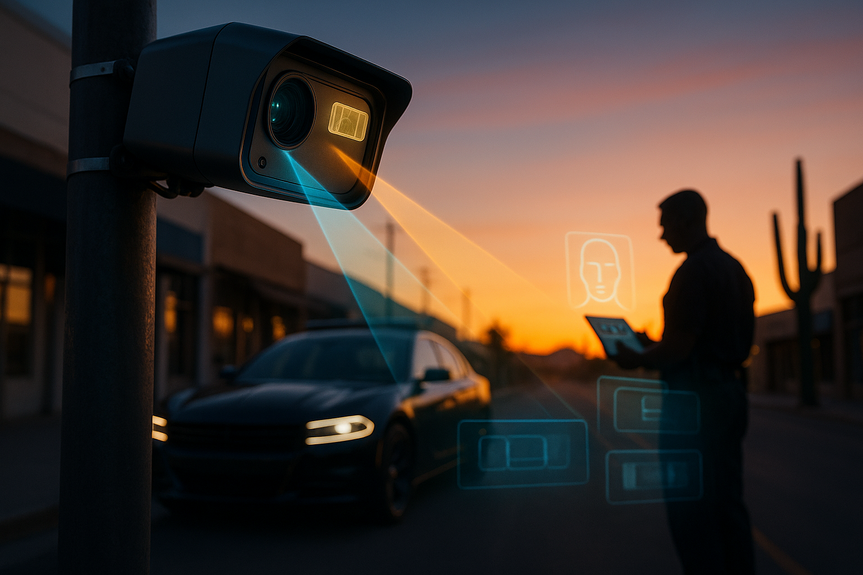
Arizona Axon AI surveillance concerns focus on how license plate readers, facial recognition, and cloud systems may track people with little oversight. Cities can boost safety without losing rights by setting strong limits, requiring audits and human review, and publishing results and error rates so the public can judge performance.
Cities across Arizona are testing new AI tools for public safety. Tempe’s pilot with license plate readers shows how fast these systems can spread. Supporters say they help catch stolen cars and find suspects faster. But critics warn about watch lists, data leaks, false “hits,” and quiet expansion into facial recognition. The question is not just “Does it work?” The question is “What rules keep it fair, accurate, and accountable?”
More data means more ways to track daily life
One error can spread across connected tools
It is hard for the public to see how systems decide
These Arizona Axon AI surveillance concerns grow when pilots start small but then expand. A tool built “just for stolen cars” can later scan every plate, everywhere, for new reasons. Guardrails must come first, not after a rollout.
Faster alerts on stolen vehicles and Amber Alerts
Better evidence management across cases
More efficient patrols and fewer manual searches
False matches that trigger stops on innocent drivers
Bias if training data is uneven or outdated
Long data retention that invites misuse or breaches
Mission creep from traffic tools to broad surveillance
Vendor lock-in that limits oversight and choice
Adopt a public surveillance use policy, passed by the council
Publish locations of fixed cameras and general deployment maps
Post annual reports with usage counts, error rates, and outcomes
Require public hearings before any new use or expansion
Test accuracy with local data before launch, not just vendor demos
Measure false positive and false negative rates and publish them
Use independent evaluations for facial recognition claims
Disable real-time face recognition unless the council approves it with strict limits
Keep non-hit plate scans for no more than 30 days
Delete non-evidentiary data on a set schedule, with audit logs
Ban sharing with non-local agencies without a warrant or formal agreement
Encrypt data at rest and in transit; keep city-held keys, not vendor-held
Require human review before acting on an automated “hit”
Confirm plate numbers and context with a second check
Ban arrests based on a match alone; require independent evidence
Mandate audit access, uptime SLAs, and data portability
Forbid re-use of city data to train external algorithms
Demand prompt breach reporting and clear liability
Build off-ramps: no automatic renewals; allow pilot exit without penalty
Hold meetings near affected sites, at varied times
Use simple language notices and visible signage
Invite civil rights groups, small businesses, and schools to comment
Provide an easy channel to report errors and seek correction
Define specific goals, like “Recover X stolen cars per quarter”
List allowed use cases in the policy, and ban others
Count verified hits, wrongful stops, and complaints
Measure time saved, cases closed, and court results
Compare outcomes to similar areas without the tool
Set a 12–18 month pilot with a required vote to continue
Commission an independent audit before renewal
Shut down features that underperform or cause harm
Do not stop a car for a near match; verify the plate and state code
Check that the “hot list” entry is active and the reason is serious
Record the reason for the stop beyond “system hit”
Provide body camera review for any force event tied to a hit
Avoid constant scanning near clinics, houses of worship, and shelters
Ban tracking of people based on protected traits or lawful activity
Require a warrant for long-term location tracking
What is the exact problem this tool solves? Is it the best option?
What are the error rates here, with our roads and plates?
How long do we keep non-hit data, and who can access it?
Can we leave the contract without heavy penalties?
Will the city publish quarterly reports and raw metrics?
Is there a clear ban on real-time face recognition without a new vote?
What’s driving Arizona Axon AI surveillance concerns?
AI now powers cameras, search tools, and alerts inside police platforms. A single vendor can link body cameras, license plate readers, and cloud databases. That scale raises new risks:Benefits police cite — and real risks
Potential benefits
Core risks
Guardrails cities need before any rollout
Governance and transparency
Technical standards and testing
Data minimization and retention
Human oversight, not autopilot
Vendor and contract terms
Community engagement
Measuring success without mission creep
Set clear objectives
Track outcomes that matter
Use sunsets and audits
How to reduce harm in day-to-day use
Policy details that prevent bad stops
Protecting sensitive places
A practical checklist for councils and residents
The bottom line on Arizona Axon AI surveillance concerns
Arizona can seek safety and still protect privacy. Addressing Arizona Axon AI surveillance concerns means setting rules now: narrow uses, short retention, independent audits, and human checks on every alert. If cities test these tools, they should do it in public, prove results, and shut them down if the promised benefits do not hold.For more news: Click Here
FAQ
Q: What are the main privacy and oversight risks of Axon’s AI tools in Arizona?
A: Arizona Axon AI surveillance concerns center on how license plate readers, facial recognition and linked cloud systems can track people with little oversight, raising risks like watch lists, data leaks and false “hits”. They also include mission creep, vendor lock-in and the difficulty for the public to see how systems make decisions.
Q: How can cities prevent mission creep when deploying license plate readers and facial recognition?
A: Cities should adopt narrow, council-approved use policies that list allowed cases and ban others, require public hearings before new deployments, and disable real-time facial recognition unless the council approves strict limits. Time-limited pilots (12–18 months) with required votes to continue and independent audits before renewal can prevent quiet expansion and mission creep.
Q: What technical testing and accuracy standards are recommended before launch?
A: Agencies should test accuracy with local data rather than rely on vendor demos, measure and publish false positive and false negative rates, and commission independent evaluations for facial recognition claims. These steps help the public judge performance and guard against biased or unreliable systems.
Q: How long should non-hit license plate scans be retained and how should data be protected?
A: The article recommends keeping non-hit plate scans for no more than 30 days and deleting non-evidentiary data on a set schedule with audit logs. It also calls for encryption in transit and at rest with city-held keys and bans on sharing with non-local agencies without a warrant or formal agreement.
Q: Can police act on an automated “hit” from Axon’s systems?
A: No; the recommendation is to require human review and a second confirmation of plate numbers and context before acting on an automated “hit”. The piece also says arrests should not be based on a match alone and independent evidence must be required.
Q: What transparency and reporting should cities publish about surveillance use?
A: Cities should adopt a council-passed surveillance use policy and publish locations of fixed cameras and general deployment maps. They should also post annual reports with usage counts, error rates and outcomes so the public can assess performance.
Q: How should communities be engaged and how can residents report errors?
A: Engagement should include meetings near affected sites at varied times, visible signage and simple-language notices, and invitations to civil rights groups, small businesses and schools to comment. Cities should also provide an easy channel for residents to report errors and seek corrections.
Q: What is the bottom line on Arizona Axon AI surveillance concerns and how can harms be reduced while pursuing public safety?
A: The bottom line on Arizona Axon AI surveillance concerns is that cities can seek safety while protecting privacy by setting rules now—narrowing uses, limiting retention, requiring independent audits and human review of every alert. Pilots should be public, measured against clear goals, and shut down if the promised benefits do not hold.
Contents