AI News
13 Apr 2026
Read 17 min
Discover Apple smart glasses designs 2027 and top picks
Apple smart glasses designs 2027 preview four styles to help you pick camera, call and music features.
Apple is reportedly preparing camera-first smart glasses for sale in 2027, with a reveal possibly this year. The focus is on comfort, hands-free capture, audio, and voice control. Early reports point to four frame shapes, three colors, and no display. Here is what to expect from Apple smart glasses designs 2027, and how to pick the right style for your needs.
Apple has been rethinking its wearable strategy. After delays and slow demand for the Vision Pro headset, the company appears to be shifting toward lighter, simpler eyewear. Bloomberg’s Mark Gurman reports that Apple is testing multiple frame styles and plans a camera-forward product that leans on Siri, music playback, calls, and quick photos or videos. Think less “AR headset,” more everyday glasses with smarts, closer to Meta’s Ray-Ban approach but with Apple ecosystem benefits.
The idea is simple: capture the moment without pulling out your phone, listen and talk on the go, and ask Siri for help. This path trades on comfort and social acceptance. Most people will wear glasses in public, while a bulky headset stands out. If Apple gets the sound quality, microphones, and battery right, these glasses could become a daily companion for many iPhone users.
Timeline and what Apple seems to be building
Rumors suggest a late-year teaser and a 2027 launch window for wide sales. The glasses are said to skip any visual display. Instead, they will focus on audio and voice, plus cameras for photos and short videos. That choice makes sense for weight, battery, and price. A display adds bulk, brings heat, and needs tricky optics. By skipping it, Apple can prioritize comfort and style. This also places the product away from sci-fi expectations and closer to practical tasks: – Hands-free capture when your hands are full – Quick calls and messages without digging for your phone – Turn-by-turn audio directions – Music and podcasts during a walk – Voice search and simple requests with Siri It is not full AR. It is a smart, connected wearable that hides its tech in normal-looking frames.Apple smart glasses designs 2027: the four frame styles
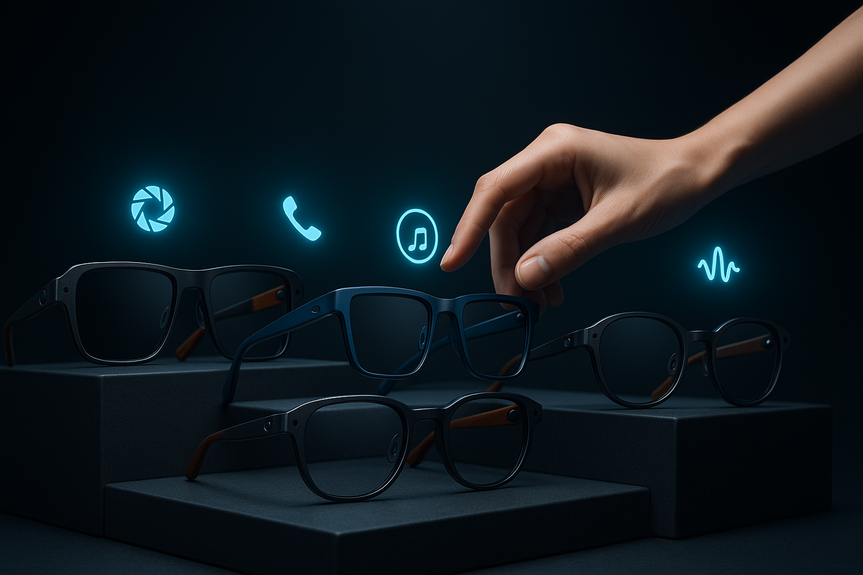
Gurman reports that Apple is testing four classic shapes. Each aims to look like real glasses rather than a gadget. Early color options include black, ocean blue, and light brown.1) Large rectangular frame
This is the boldest and most spacious look. A larger frame can hide bigger batteries, more microphones, and better speakers. It may fit faces that prefer a statement style. It could also give engineers more room for camera modules and sensors. Expect a strong presence on the face and better acoustic space for audio.2) Slim rectangular frame
Think a leaner silhouette, closer to what Apple’s CEO often wears. This likely targets everyday wearers who want a light, minimal design. It should slip into more social and work settings without drawing attention. The challenge is packing great microphones and speakers into a thin temple arm. If Apple pulls it off, this could be the most popular model for daily use.3) Large oval or circular frame
Round styles never go out of fashion. A larger round frame offers similar benefits to the big rectangular design: more space and stronger sound. It may appeal to users who love a vintage or creative look. Round lenses can sit well on many face shapes. For tech hiding in plain sight, a big round style can be both fun and functional.4) Small oval or circular frame
This is the lightest and most compact option. It aims for comfort and subtlety. It may favor users with smaller faces or those who want the least “techy” look. But tight space can limit battery size and speaker depth. Expect great wearability, with possible trade-offs in loudness or recording time.Colors and what they say
Black is timeless and professional. Ocean blue is fresh yet calm. Light brown feels warm and classic. These colors also help hide camera lenses and vents in the frame. Expect matte finishes and precise lines that fit Apple’s design language.Core features: what daily life could look like
Apple appears to be building a camera-first, audio-first wearable. Reports suggest no display, but a strong set of light, helpful features.Hands-free photos and videos
Tap or voice to capture. This works great when cooking, carrying bags, playing with kids, or biking. Runners and hikers can film routes without stopping. Expect short clips for social sharing. Rumors point to oval-shaped camera lenses, which can blend into the temples or corners for a cleaner look.Phone calls and messages
Open-ear speakers and beamforming microphones can support clear calls without sealing your ears. That keeps you aware of traffic and people around you. You might accept a call, reply to a text, or send a quick audio note with a simple command to Siri.Music and podcasts
You can listen while keeping your ears open. This is ideal for commuting, walking the dog, or waiting in line. The big question is volume and clarity in noisy places. Apple knows audio, and good directional sound could help reduce leakage while staying discreet.Siri, but better
The long-talked-about Siri upgrade is key. If voice control is the main interface, it must be fast, accurate, and helpful. You will want natural language support, context memory, and smart follow-ups. If Siri improves, these glasses become far more useful. If Siri lags, the device becomes a camera with speakers.Privacy and safety signals
Glasses with cameras raise questions. People want to know when recording happens. Apple has a history of strong privacy positions, so we can expect clear recording indicators and strong on-device controls. The exact approach is unknown, but social trust will matter as much as specs.How this compares with Meta’s Ray-Ban approach
Meta has a head start with Ray-Ban glasses. Those frames look like normal eyewear, record clips, play audio, and answer voice prompts. Apple’s strategy seems similar, but with different strengths. – Design control: Apple tends to integrate hardware and software tightly. That can improve battery use, audio tuning, and camera capture across iPhone, iCloud Photos, and Apple Music. – Ecosystem: If you use iPhone, AirPlay, Apple Photos, and Messages, these glasses could slide right in. Setup, permissions, and syncing may feel seamless. – Voice: If the Siri overhaul arrives in time, Apple could match or beat rivals on everyday voice tasks, reminders, and device handoff. – App tie-ins: Even without a display, Apple can add value through Apple Maps audio directions, Fitness workout cues, and Photos auto-organization.Design trade-offs to watch
Building comfortable, smart glasses is hard. Some factors will shape how these feel to wear all day.Weight and balance
Batteries and cameras add grams. A heavy front makes glasses slide down your nose. Expect Apple to spread weight into the temples and hinge zones. Lighter frames help, but they must stay sturdy.Battery life
Always‑on microphones and frequent recording drain power. Apple may rely on short video clips and efficient chips to stretch battery life. Offloading more work to the iPhone can also reduce heat and power use in the frames.Audio quality
Open-ear speakers must deliver clear sound to you, not the whole room. Directional drivers and smart EQ could help. Microphones must isolate your voice on a busy street. Apple’s past work on AirPods suggests strong tuning here.Connectivity
A smooth link to iPhone is critical. Fast pairing, stable Bluetooth, and low-latency voice processing will make or break the experience. Handoff between phone and glasses should feel automatic.Durability and weather
Everyday eyewear needs to handle sweat, light rain, and drops. Even if full waterproofing is unlikely, basic splash resistance and tough hinges will be important for long-term use.Who will love these—and who may wait
Different users will see value in different ways. – Creators and vloggers: Quick, hands-free clips from your daily life or trips. – Parents and pet owners: Capture moments without fumbling for a phone. – Commuters and walkers: Calls, texts, and music while staying aware of surroundings. – Fitness fans: Audio cues for pace and route tips without closing off your ears. – Accessibility: Voice-first controls can help users who prefer spoken input. Users who want overlays, screens, or rich AR may wait for a future product. If you need visual navigation or real-time captions on a screen in your view, these first glasses likely will not deliver that.Top picks to watch if Apple ships multiple styles
We do not know which models will ship, but here is how to pick if several arrive at once.Best for all-day wear
If you move between the office, café, and errands, a slim rectangular frame could be the sweet spot. It tends to fit many faces, slide under hats, and match both casual and formal looks.Best for audio lovers
A large rectangular or large round frame likely has more room for speakers. If loud, clear music and podcasts matter most, the bigger styles could sound better and run longer.Best for creators on the go
If comfort and stealth matter for street photos or quick travel clips, the small round or slim rectangular frames are easier to wear for hours without drawing eyes.Best style statement
Large round frames can stand out in photos and events. If you want people to notice your glasses as fashion, go big and circular in a bold color.Color advice
– Black: Safe, formal, and easy to match. – Ocean blue: Modern and fresh without shouting. – Light brown: Warm, classic, and friendly, great for daylight settings.What to check before you buy
A few details will shape your decision when specs go public. – Recording limits: How long can you shoot per clip? How many clips per charge? – Microphone pickup: Do calls sound clear in traffic or wind? – Volume and leak: Can you hear music well without bothering people nearby? – Privacy cues: Are there bright LEDs or sounds to show you are recording? – Siri speed: Does voice feel instant and accurate for your daily tasks? – Prescription support: Can you add your lenses easily, and how long does it take? – Fit and comfort: Do the temples pinch? Does the nose bridge slip? – Repair and battery service: What happens after two years of use?Market impact: why this approach makes sense
Skipping a display reduces weight and complexity. It fits what people already accept in public. It also plays to Apple’s strengths: audio quality, voice, camera pipelines, and tight ecosystem links. The company learned from the Vision Pro’s price, size, and niche appeal. A smaller, friendlier device can reach millions faster. This also aligns with how people already use phones. A huge share of phone use is audio, voice, and camera. Moving those tasks to glasses can save time and keep you present in the moment. It may not be a computing revolution, but it could be a big lifestyle upgrade—especially for iPhone users.The road ahead
Key signals to watch: Apple’s Siri overhaul, developer tools for voice-first apps, and how Apple handles social norms around recording. If the company nails those, launch-day demand could be strong. If voice feels slow or privacy feels vague, adoption could lag. If Apple smart glasses designs 2027 stay focused on lightness, clear audio, sharp capture, and strong Siri, Apple could define this new category the same way AirPods did for true wireless earbuds: simple, stylish, and everywhere. In closing, reports suggest a stylish, no-display wearable aimed at quick capture, audio, and voice. The four rumored shapes and three colors offer real choice. If you want hands-free photos, clear calls, and smart help without a screen, keep an eye on Apple smart glasses designs 2027—they may be the most “normal” way to wear tech yet. (Source: https://techcrunch.com/2026/04/12/apple-reportedly-testing-four-designs-for-upcoming-smart-glasses/) For more news: Click HereFAQ
Q: What frame shapes is Apple reportedly testing for its smart glasses?
A: According to Bloomberg’s Mark Gurman, Apple is testing four frame shapes: a large rectangular frame, a slimmer rectangular frame, a larger oval or circular frame, and a smaller oval or circular frame. These reported options reflect the Apple smart glasses designs 2027 being evaluated.
Q: Will Apple’s smart glasses include an integrated display?
A: Reports indicate the glasses will skip any visual display and instead focus on audio, voice, and cameras to keep weight, battery use, and complexity down. This choice aligns with the camera-first approach described in coverage of Apple smart glasses designs 2027.
Q: What core features can users expect from the reported design?
A: The reported glasses emphasize hands-free photos and short videos, audio playback, phone calls, and voice control via Siri rather than AR overlays. They are described as camera-first and audio-first wearables focused on quick capture, calls, music, and voice tasks.
Q: When might Apple reveal and sell these smart glasses?
A: Rumors point to a possible teaser late this year with wide sales planned for 2027, according to Bloomberg’s Mark Gurman. Exact dates were not reported and remain subject to change.
Q: How do these glasses compare to Meta’s Ray-Ban models?
A: Reports say the glasses will resemble Meta’s Ray-Ban lineup in being normal-looking frames that record clips and play audio, but without displays. Apple’s approach reportedly leans on tight ecosystem integration, audio tuning, and camera pipelines for iPhone users.
Q: What color and finish options have been mentioned for the glasses?
A: Early reports list three color options — black, ocean blue, and light brown — and suggest matte finishes and precise lines consistent with Apple’s design language. The colors are said to help conceal camera lenses and vents in the frames.
Q: Who might benefit most from Apple’s camera-first smart glasses?
A: Reported target users include creators and vloggers who want quick hands-free clips, parents and pet owners capturing moments, commuters and walkers who need calls and music while staying aware of surroundings, and fitness fans wanting audio cues. Accessibility users who prefer voice-first controls are also mentioned as potential beneficiaries.
Q: What key factors should buyers check before choosing between the different Apple frame styles?
A: Buyers should check recording limits, microphone pickup in noisy environments, volume and sound leakage, visible privacy cues, Siri responsiveness, prescription support, fit and comfort, and repair or battery service policies. Those considerations reflect the trade-offs in battery life, audio quality, and weight described for the Apple smart glasses designs 2027.
Contents