AI News
15 Oct 2026
Read 8 min
Fake Houthi airport attack video How to spot AI signs
Fake Houthi airport attack video: learn to spot AI signs and verify footage quickly and confidently
A viral clip claimed to show a strike at a Saudi airport, but the fake Houthi airport attack video was made with AI. It shows physics glitches, people vanishing into glass, and shifting scenes. Meta’s detection tool flagged it as synthetic. Here’s how to spot such fakes fast and avoid spreading panic.
In mid-October 2026, real attacks hit airports in Saudi Arabia, including deadly strikes in Riyadh and a reported attempt on Dammam. At the same time, a short clip surged on social platforms claiming to show one of the blasts. The footage looked dramatic, but it was not real. The same video had already been shared months earlier as “Dubai airport,” and AFP debunked it then. This time, investigators again found clear AI tells and tool-based flags pointing to a generated scene.
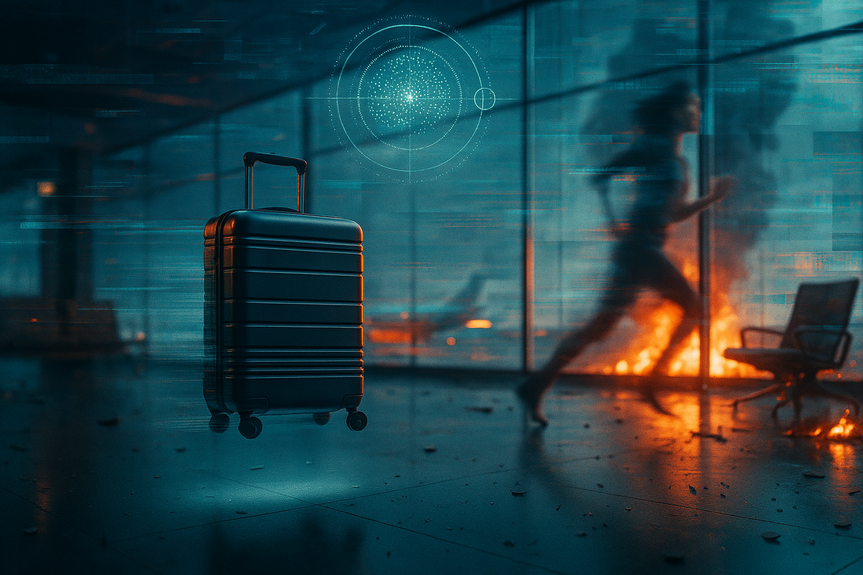
A suitcase moves by itself after a woman pulls it, breaking basic physics.
The woman runs left, collides with a glass wall, and then disappears from the scene.
The location morphs: an indoor lounge at the start becomes an outdoor area with flames by the end.
These odd jumps, object glitches, and sudden scene changes are common signs of AI generation. The platform detection tool from Meta also marked the clip as synthetic, adding a second layer of warning.
Freeze the video. Scan for warped hands, faces, luggage wheels, or letters on signs that bend or melt.
Watch shadows and reflections. AI often misaligns light, mirrors, and glass glare.
Check motion. Look for rubbery running, “teleport” cuts, or smoke and fire that loop or float oddly.
Listen to audio. Reused screams, flat ambience, or mismatched echoes are red flags.
Compare the setting. Match seating, gates, or storefronts with recent photos of the actual airport.
Search for confirmation. Look for reports from the airport operator, civil aviation, and major news agencies.
There were real attacks. That made shocking visuals feel believable without proof.
Short clips travel fast. Shares and quotes on X and Weibo boosted reach in minutes.
Recycled content. The same footage had been repackaged before for another airport.
AI tools lower the bar. Anyone can render chaotic scenes that mimic breaking news.
When real events unfold, people want updates now. That urgency makes it easy for a recycled AI clip to fill the gap and go viral before facts catch up.
Pause on three frames and run a reverse image search (Google Lens or similar).
Scan for visual glitches: physics breaks, vanishing people, text warps, and morphing scenes.
Cross-check time and place with airport notices, local media, and wire services.
Look for platform labels. If a tool flags “AI-generated,” treat it as unverified at best.
Wait for a second credible source. If none appears, don’t share.
InVID-WeVerify: keyframes, metadata, and reverse search.
Google Lens or Bing Visual Search: find earlier uses of the same frames.
Wayback Machine: check if the clip circulated before under a different claim.
Platform detection (like Meta’s): quick signal for synthetic media.
Label uncertainty: say “unverified” if you cannot confirm origin, date, and place.
Share sources, not just clips: link to credible reports with on-the-record statements.
Correct the record: if you posted the video, update or remove it once it’s debunked.
Teach your circle: explain the signs you spotted so others can do the same.
Spotting AI tells in the fake Houthi airport attack video
What viewers saw in this clip
Other quick checks you can do
How the claim spread and why it felt real
Verify before you share
Simple 60-second workflow
Helpful tools
Context still matters
Real harm did occur in Saudi Arabia in October 2026, including a missile strike on Riyadh’s King Khalid International Airport that killed at least 13 and injured many more, and another attack the next day that killed one person. Confusing an AI fabrication with verified footage can mislead families, responders, and reporters when clarity matters most.What responsible sharing looks like
Bottom line
The fake Houthi airport attack video shows how fast AI clips can hijack a real crisis. Slow down, run a few checks, and look for official confirmation before you post. By learning the tells and using basic tools, you can stop the next fake Houthi airport attack video from spreading further. (p)(Source: https://factcheck.afp.com/doc.afp.com.D33V8T3)(/p) (p)For more news: Click Here(/p)FAQ
Q: What is the fake Houthi airport attack video and why is it false?
A: The fake Houthi airport attack video is a 14-second clip circulated as footage of a Saudi airport strike but was created with generative AI. It contains visual inconsistencies such as physics glitches and disappearing people, and Meta’s detection tool flagged it as synthetic while AFP previously debunked the same clip in March 2026 when it was shared as Dubai airport footage.
Q: What visual signs indicate the clip was AI-generated?
A: The clip shows a suitcase moving by itself, a woman running into glass and disappearing, and an indoor lounge turning into an outdoor scene with flames, which are classic AI tells. These object glitches, scene morphing and physics breaks were cited by AFP as evidence the footage was generated rather than real.
Q: How was the fake Houthi airport attack video detected by platforms and investigators?
A: Meta’s AI detection tool flagged the clip as synthetic content, providing a technical signal that it was not authentic. AFP investigators also pointed to multiple visual inconsistencies and prior circulation as supporting evidence.
Q: Did the clip show the real October 2026 attacks on Saudi airports?
A: No — the video did not show the verified October 2026 airport attacks and was an AI-generated clip. Real strikes did occur in October 2026, including a missile strike on Riyadh’s King Khalid International Airport that killed at least 13 people and wounded hundreds, and separate attacks on King Fahd International Airport in Dammam and another attack that killed one person the following day.
Q: What quick checks can I do in 60 seconds to verify a suspicious airport video?
A: Pause on three frames and run a reverse image search, scan for visual glitches like warped text, vanishing people or unrealistic motion, and look for platform labels that flag AI-generated content. Then cross-check time and place with airport notices, local media or wire services and wait for a second credible source before sharing.
Q: Which tools are recommended to verify whether a clip is fake?
A: InVID-WeVerify is useful for extracting keyframes and metadata, Google Lens or Bing Visual Search can find earlier uses of the same frames, and the Wayback Machine can show prior circulation. Platform detection tools like Meta’s identification tool can also flag synthetic media as an additional signal.
Q: If I already shared the fake Houthi airport attack video, what should I do now?
A: Update or remove your post and add a clear correction or “unverified” label once you learn it was fabricated, and replace the clip with links to credible reports when possible. Explain the signs you spotted to your contacts so they can avoid sharing the same fake and correct the record if needed.
Q: Why is it important to verify footage during real crises like the October 2026 attacks?
A: Verifying footage matters because real harm occurred and confusing an AI fabrication with verified footage can mislead families, responders and reporters when clarity is most needed. False clips can spread panic and hinder accurate reporting during unfolding events.
Contents