AI News
24 Jul 2026
Read 8 min
George Lucas on AI in filmmaking Discover why it matters
George Lucas on AI in filmmaking urges using tools responsibly to speed production and detect fakes.
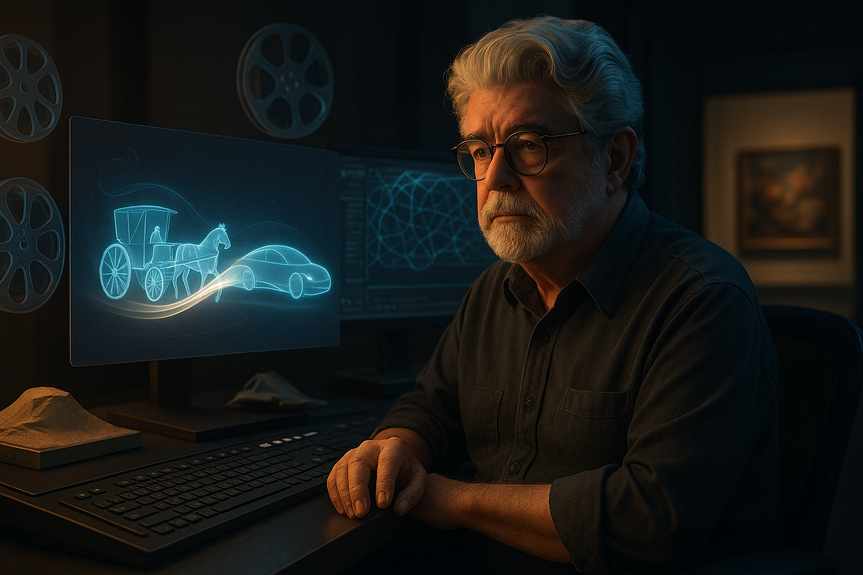
George Lucas on AI in filmmaking says the tools are coming whether we like it or not. He compares them to cars replacing horses. He doesn’t cheer for generative AI, but he accepts progress. He wants responsible use, including tech that flags fakes and tracks sources.
George Lucas sparked debate with new comments about AI and movies. He did not issue a love letter to chatbots. He argued that new digital tools are part of progress, much like the move from film to digital. He has held this view for decades, going back to the prequels and his work with ILM. He spoke ahead of the Lucas Museum of Narrative Art opening on September 22, 2026.
George Lucas on AI in filmmaking: what he really said
Lucas used a simple point: new tech arrives, and artists decide how to use it. He compared resistance to AI tools to clinging to horse-drawn buggies after cars appeared. He was not endorsing every use case. He was saying change is coming, and storytellers should guide it. He also reminded people that “AI” gets used as a catch-all term. Many tools in editing and visual effects have existed for years. Teams used pattern-finding software to track shots, clean frames, and speed up tasks long before today’s generative models. The debate about George Lucas on AI in filmmaking misses that history.What “AI” means on a film set today
Everyday tools that help crews work faster
- Shot tracking and stabilization that lock effects to moving objects
- Smart roto and keying that separate actors from backgrounds faster
- Color matching, upscaling, and de-noising that clean images
- Automated crowd cleanup and wire removal that save hours of paint work
Tools that raise red flags
- Generative systems that copy style from scraped art and writing without consent
- Agent-like bots that act without clear oversight or credit
- Large-scale models that burn heavy energy with unclear benefits
- Workflows that replace paid crew with synthetic stand-ins
Why people push back
Many fans and creators worry about modern AI for good reasons:- Credit and consent: training data often comes from artists who never agreed
- Jobs and pay: studios may cut staff while quality suffers
- Energy use: big models can raise costs and harm the environment
- Trust: deepfakes can spread lies and blur what is real
AI for safety and trust
Lucas pointed to a helpful use: tools that detect digital fakes and trace sources. This includes watermarking, provenance labels, and forensic checks. A system can scan frames faster than people and flag edits. Studios, newsrooms, and platforms can use these checks to protect audiences and credits.How to use new tools without losing the art
Principles for studios and filmmakers
- Lead with people: writers, actors, editors, and artists make the choices
- Get consent: secure rights for any data or likeness you use
- Credit and pay: reward the humans whose work trains or guides tools
- Set guardrails: write policies on disclosure, safety, and data security
- Measure impact: track energy use and choose efficient options
- Tell the audience: label synthetic elements and keep behind-the-scenes honest
Skills that keep you future-ready
- Story and visual language: timeless skills that no tool replaces
- On-set craft: lighting, sound, blocking, and camera movement
- Post basics: color, editing rhythm, and VFX supervision
- Ethics and law: rights, consent, and transparency
The bigger picture
Lucas has long pushed film tech forward while keeping the human goal in focus: clear, emotional stories. Many of his once-criticized tools are now standard. That pattern may repeat. The best results come when new software meets strong human direction, fair credit, and clear rules. In short, George Lucas on AI in filmmaking is a call to face change with steady hands. Welcome helpful tools, reject exploitative shortcuts, and center human authorship. If we do that, movies can get easier to make without losing the magic that makes them matter.For more news: Click Here
FAQ
Q: What was George Lucas’s main point about AI in filmmaking?
A: George Lucas on AI in filmmaking argued that new digital tools are inevitable and will make movies easier, likening the shift to cars replacing horses. He clarified he was not endorsing every use case and urged that storytellers guide technology responsibly.
Q: Did Lucas endorse generative AI or agentic AI?
A: He did not praise generative or agentic AI and stopped short of endorsing systems that replace creative workers. The article distinguishes those controversial models from longstanding machine-learning tools used to speed technical tasks.
Q: Why did Lucas’s comments spark backlash from some creators and fans?
A: His remarks touched a contentious topic because many associate modern AI with generative systems that scrape artists’ work, consume large amounts of energy, and threaten jobs. The broad labeling of diverse digital tools as “AI” also fuels disagreement and misunderstanding.
Q: What kinds of AI-like tools are already used on film sets today?
A: Common tools include shot tracking and stabilization, smart roto and keying, color matching, upscaling and de-noising, plus automated crowd cleanup and wire removal. These systems learn patterns from human input and are meant to cut grunt work while keeping artists in control.
Q: Can AI be used to detect fakes and protect provenance in filmmaking?
A: Yes — Lucas pointed to tools that can flag digital fakery and trace sources using watermarking, provenance labels, and forensic checks that scan frames faster than people. He emphasized such systems can support accountability while humans remain responsible for illegal actions.
Q: What principles does the article recommend for using AI tools responsibly in movies?
A: The piece recommends leading with people, securing consent and credit, writing policies for disclosure and data security, and measuring energy use. It also advises labeling synthetic elements and keeping human authorship and fair pay at the center of workflows.
Q: How has Lucas’s past work with ILM and the prequels influenced his view on digital tools?
A: He helped pioneer digital technology at ILM and used many of these tools since before The Phantom Menace, which informs his view that such changes are inevitable. That history leads him to treat some modern “AI” tools as extensions of longstanding digital workflows rather than entirely new inventions.
Q: How does the article suggest filmmakers preserve the human element as AI advances?
A: It urges treating AI as a toolbox that speeds tedious tasks so artists can focus on story, visual language, and on-set craft. Maintaining skills in storytelling, lighting, editing and ethics is presented as the best way to keep human judgment central as new tools arrive.
Contents