AI News
09 Aug 2026
Read 9 min
How AI-based salmonella detection in poultry speeds response
AI-based salmonella detection in poultry helps producers spot infections faster and reduce outbreaks.
AI-based salmonella detection in poultry pairs smartphone photos of droppings with bird movement data to flag risk in near real time. University of Georgia researchers, funded by the USPOULTRY Foundation, showed these tools can speed on-farm decisions, reduce testing delays, and strengthen biosecurity with low-cost, practical monitoring that fits daily barn work.
Salmonella can move quickly through a flock. Waiting days for lab results can let a small problem become a costly one. New computer vision and machine learning tools tested by University of Georgia scientist Dr. Guoming Li’s team point to a faster way: use images and behavior signals to warn producers sooner so they can act the same day.
Isolate suspect areas or flocks
Deep clean targeted zones instead of whole barns
Adjust traffic flow, equipment sharing, and litter handling
Call for confirmatory tests with better timing and sampling
Phones and barn cameras are already common
AI runs on-device or in a simple cloud app
Alerts can feed into daily chore routines
Low cost per check encourages frequent scanning
Earlier action: Intervene hours or days sooner to slow spread
Targeted response: Clean, sample, and treat where it matters most
Lower costs: Use quick screens before ordering broad lab panels
Labor efficiency: Fold checks into routine walk-throughs
Better records: Pair images and activity data with timestamps and locations
Stronger biosecurity: Turn one-off checks into continuous monitoring
Adopting AI-based salmonella detection in poultry can shorten the time between risk and response. That time savings is often the difference between a contained issue and a multi-house disruption.
Pick consistent spots to photograph fresh droppings during each walk-through
Use even lighting; avoid glare and shadows
Upload images to the model and log locations
Re-check flagged areas and schedule confirmatory lab tests when alerts persist
Install ceiling-mounted cameras that see the flock floor
Collect short clips at the same times daily
Review the Broiler Activity Index for unusual dips or spikes
Cross-reference with temperature, feed, and water records
Define thresholds for when to isolate, clean, or sample
Train staff on safe image capture and data handling
Document actions taken after each alert to improve playbooks over time
These steps move AI-based salmonella detection in poultry from trial to routine use, with minimal hardware and clear checklists.
Store images and video with dates, house numbers, and flock ages
Back up data and restrict access to trained staff
Update models as new flocks and seasons add variety to the dataset
Track time from alert to action
Compare costs of targeted versus whole-house responses
Monitor prevalence trends across flocks and houses
Why faster detection changes outcomes
The on-farm challenge
Traditional monitoring relies on scheduled sampling and lab tests. These are accurate, but slow. Meanwhile, birds shed bacteria, and people and equipment can spread it across houses.Speed turns data into decisions
When alerts arrive earlier, managers can:How AI-based salmonella detection in poultry works
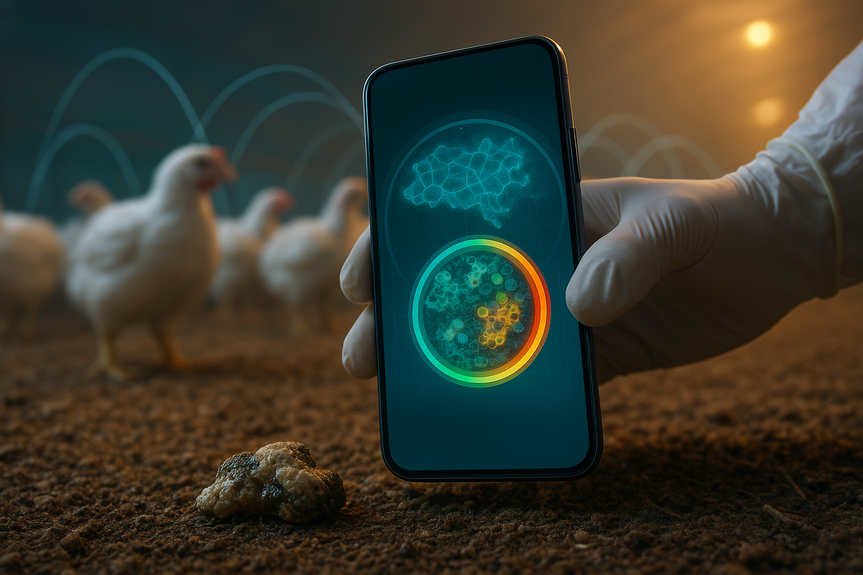
Smartphone images of droppings
Workers capture clear photos of fresh feces with a standard phone. An AI model scans color, texture, and other visual patterns linked to contamination risk. Results give a quick “likely” or “unlikely” signal that guides next steps. This does not replace culture or PCR, but it helps decide when and where to test.Movement patterns and the Broiler Activity Index
Video or sensor data tracks how birds move through the day. Subtle shifts in activity—less exploration, tighter clustering, or reduced feeding trips—can flag health stress. The research evaluated a Broiler Activity Index as an early indicator of salmonella exposure, giving producers another noninvasive signal to watch.Why it’s practical
Benefits producers can bank on
Getting started: a simple path
Set up for image checks
Track bird activity
Fold AI into SOPs
Accuracy, validation, and safeguards
Use AI as an early screen, not a final verdict
AI flags patterns, but farms vary by lighting, litter, diet, and breed. Expect some false positives or negatives. Confirm important alerts with standard culture or PCR before major decisions.Keep data clean and secure
Measure what matters
What this means for the wider supply chain
Processors and integrators gain earlier visibility of risk, which helps plan logistics and sanitation at plants. Consistent, on-farm screening can support regulatory compliance and protect brand trust. Over time, shared, anonymized benchmarks could raise industry-wide performance without adding heavy burdens to daily farm work. The University of Georgia team’s findings, backed by the USPOULTRY Foundation, show practical promise: simple cameras and activity analytics can turn daily observations into timely action. AI-based salmonella detection in poultry offers a faster, low-cost way to strengthen flock health and biosecurity, helping producers respond with confidence before small issues grow. (p)(Source: https://meatingplace.com/ai-tools-may-boost-salmonella-detection-in-poultry/)(/p) (p)For more news: Click Here(/p)FAQ
Q: What is AI-based salmonella detection in poultry?
A: AI-based salmonella detection in poultry uses computer vision and machine learning to analyze smartphone images of droppings and bird movement data to flag contamination risk in near real time. University of Georgia researchers tested these tools as a faster, low-cost approach to help producers monitor flocks and make quicker on-farm decisions.
Q: How do smartphone photos of droppings help identify Salmonella risk?
A: Workers capture clear photos of fresh feces and an AI model scans visual features such as color and texture to produce a quick “likely” or “unlikely” signal, which is a core part of AI-based salmonella detection in poultry. This screen helps prioritize where to sample and does not replace confirmatory culture or PCR tests.
Q: What is the Broiler Activity Index and how can bird movement indicate infection?
A: The Broiler Activity Index tracks daily movement patterns—like exploration, feeding trips, or clustering—using video or sensors to spot subtle shifts in behavior. University of Georgia researchers evaluated it as an early, noninvasive indicator that can complement image-based screening.
Q: How much faster can AI tools alert producers compared to traditional lab testing?
A: AI-based salmonella detection in poultry can flag risk during routine walk-throughs so producers may receive alerts the same day, while traditional culture or PCR testing often takes days for results. That earlier warning can allow managers to isolate areas, target cleaning, and time confirmatory tests more effectively.
Q: Can AI replace laboratory culture or PCR tests for confirming Salmonella?
A: No; AI-based salmonella detection in poultry is intended as an early screening step and can produce false positives or negatives because farms vary by lighting, litter, diet, and breed. Confirmatory culture or PCR testing is recommended before major management decisions.
Q: What equipment and setup are needed to implement these AI detection tools on a farm?
A: AI-based salmonella detection in poultry typically requires phones and barn cameras, with ceiling-mounted cameras recommended to capture flock movement and consistent photo spots for droppings using even lighting to avoid glare. The article notes the AI can run on-device or in a simple cloud app and that alerts can be folded into daily chore routines.
Q: What data management and biosecurity safeguards should farms follow when using AI screening?
A: Store images and video with dates, house numbers, and flock ages, back up data, and restrict access to trained staff while updating models as new flocks and seasons add variety. Farms should also document actions taken after alerts, track time from alert to action, and cross-reference activity signals with temperature, feed, and water records.
Q: How can AI-based salmonella detection in poultry affect processors and the wider supply chain?
A: On-farm screening can give processors and integrators earlier visibility of risk to help plan sanitation and logistics at plants, and consistent checks can support regulatory compliance and protect brand trust. Over time, shared anonymized benchmarks from these tools may help raise industry-wide performance without adding heavy burdens to daily farm work.
Contents