AI News
23 Jul 2026
Read 9 min
How AI turbulence prediction for pilots reduces injuries
AI turbulence prediction for pilots helps crews sit before bumps and reduces passenger injuries now.
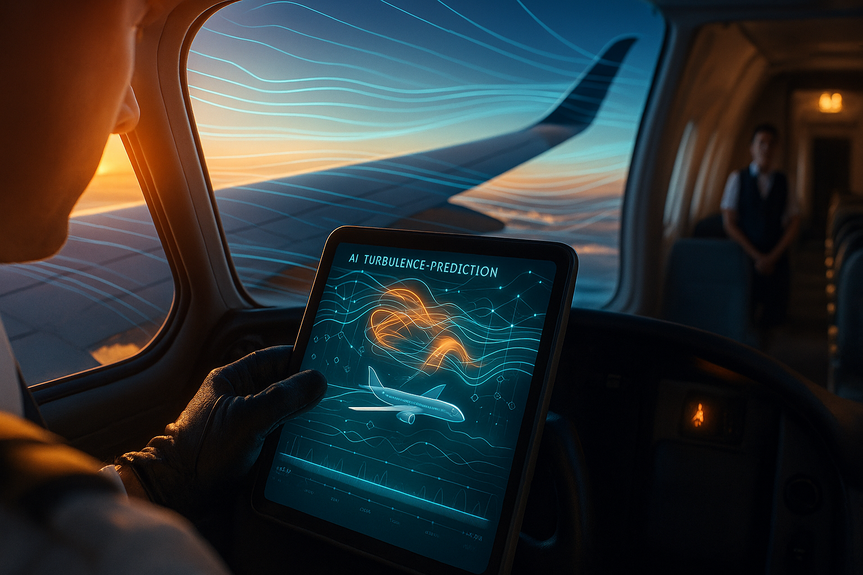
AI turbulence prediction for pilots gives crews earlier warnings of rough air. Sensors and shared data flag bumps minutes or hours ahead, so captains can seat crews, pause service, and switch on seatbelts in time. Airlines report fewer injuries and smoother rides, while human judgment still sets the final call.
Turbulence can feel random, but pilots face a careful timing decision: protect people without stopping service too soon. New, data-driven tools help. Airlines now crowdsource in-flight motion data, blend it with weather, and send cockpit alerts that point out when and where rough air will hit. The result is faster action and safer cabins.
AI turbulence prediction for pilots: how it works
Crowdsourced weather, live from the sky
Pilots have long used forecasts, reports from other aircraft, and air traffic control. Those tools can lag. Today, systems like SkyPath add live data from sensors on pilots’ iPads and other devices as planes cross the sky. The platform cleans the data and maps bumpy zones ahead, much like Google Maps shows traffic from many cars. Major carriers, including United Airlines and Japan Airlines, plus private operators such as Silver Air Private Jets, use SkyPath. The company says its model can project turbulence up to 24 hours ahead with about 90% accuracy. All Nippon Airways also reports an AI tool that forecasts rough air with about 86% accuracy. IATA’s Turbulence Aware program pools data from dozens of airlines and is exploring AI, too.Real-time cockpit prompts
With AI turbulence prediction for pilots, a captain may see a message like “moderate turbulence in 13 minutes.” That heads-up gives time to call flight attendants, end service, stow carts, and get everyone seated before the bumps. It can also confirm smooth air, which helps crews turn off the seatbelt sign sooner.Why timing the seatbelt sign matters
Turbulence often arrives without a visual cue, especially clear-air turbulence. Even a short burst can injure unbelted passengers or crew. If the sign comes on too late, people may still be standing. If it stays on too long, service stalls and comfort drops. Better timing is the goal.Safer cabins, steadier service
Early alerts let crews do the right thing at the right moment:- Seat flight attendants before the aircraft jolts
- Pause hot drinks and meal carts safely
- Ask passengers to buckle up with clear, calm messages
- Change altitude or route to avoid the worst pockets
- Resume normal service sooner after the bumps pass
What early results say
Japan Airlines reported in 2025 that AI tools lowered pilot workload and raised safety. SkyPath analyzed data from several airlines over two years and found about a 50% drop in moderate-or-greater encounters among users, even as overall turbulence reports increased. In a review of 180 real-world events, SkyPath said relevant warning data existed before the incident in 79% of cases, giving pilots time to act. These figures point to a simple trend: when crews see reliable, shared data sooner, they can protect people sooner. Fewer unplanned jolts during service means fewer injuries.Limits, safety, and human judgment
AI does not replace the pilot. It adds another input to a well-trained decision-maker. Clear-air turbulence can still surprise. Models can miss pockets or overcall roughness. That is why captains blend forecasts, other pilots’ reports, ATC guidance, aircraft performance, and their own experience with the new tools. It also helps to remember what turbulence is—and what it is not. It is bumpy air, not a structural threat to modern jets. Long, flexible wings on planes like the Boeing 787 are built to bend and ride it out. Most injuries happen because someone is unbelted at the wrong time, not because the aircraft is in danger. Better data helps fix that timing.What travelers will notice
Clearer communication
When alerts predict bumps in 10 to 15 minutes, the captain can explain what is coming and why the seatbelt sign is on. That message reduces anxiety for many flyers.Smarter seatbelt use
Expect the sign to come on a bit earlier before known rough patches and to go off sooner when tools confirm smooth air ahead. You may also see proactive altitude changes as crews steer around reported hot spots.Fewer disruptions, fewer injuries
Airlines that use AI turbulence prediction for pilots report fewer moderate-or-worse jolts during service. That means fewer coffee spills, fewer sprains, and fewer cabin crew injuries—the most common in-flight medical events related to turbulence.Climate and the road ahead
Some studies link rising global temperatures to more clear-air turbulence. If rough air increases, shared data and AI will matter even more. Broader adoption and regional data sharing—especially across busy corridors—should keep improving accuracy and coverage. In the end, AI turbulence prediction for pilots is about timing and trust. The tech gives crews earlier clues; the pilots make the call. That partnership is already cutting injuries and calming cabins—and it will keep getting better as more aircraft share data and more passengers keep their belts on when seated.(Source: https://www.businessinsider.com/pilots-airlines-using-ai-tools-better-time-seatbelt-sign-on-2026-7)
For more news: Click Here
FAQ
Q: What is AI turbulence prediction for pilots and how does it help flight crews?
A: AI turbulence prediction for pilots uses AI models to combine live sensor data from aircraft, weather information, and pilot reports to forecast bumpy air ahead. These alerts give crews time to seat flight attendants, pause service, and switch on the seatbelt sign before bumps arrive, while pilots make the final call.
Q: Which systems and airlines are using these turbulence tools?
A: SkyPath is used by carriers such as United Airlines and Japan Airlines and by private operators like Silver Air Private Jets, and All Nippon Airways has integrated its own AI-based tool. The International Air Transport Association runs the Turbulence Aware program with nearly 30 partner airlines and is exploring AI integration.
Q: How accurate are the AI forecasts pilots receive?
A: SkyPath says its model can predict turbulence up to 24 hours ahead with about 90% accuracy, and All Nippon Airways reported a tool with roughly 86% accuracy. Reported accuracy varies by provider and region, and models can still miss pockets of clear-air turbulence.
Q: What evidence shows these tools reduce injuries and improve safety?
A: Early operator reports and studies suggest benefits: Japan Airlines reported decreased pilot workload and increased safety in 2025, and SkyPath found about a 50% reduction in moderate-or-greater turbulence encounters across several airlines. SkyPath also reported that in a review of 180 real-world events, relevant warning data existed before the incident in 79% of cases.
Q: How do pilots use AI alerts to time the seatbelt sign and cabin service?
A: Pilots can receive specific prompts like a forecasted time to moderate turbulence, which lets them call flight attendants to sit, stow service carts, and turn on the seatbelt sign before the bump. The alerts also help confirm smooth air so crews can resume service and turn the sign off sooner when appropriate.
Q: Does AI replace pilot judgment in turbulence decisions?
A: No, AI turbulence prediction for pilots is an additional input rather than a replacement; captains still blend AI alerts with forecasts, other pilots’ reports, air-traffic control guidance, aircraft performance, and experience. Because models can overcall or miss turbulence pockets, human judgment remains essential for final decisions.
Q: What will passengers notice when airlines use these AI tools?
A: Passengers may hear clearer explanations from the captain about upcoming bumps, see the seatbelt sign come on a bit earlier before known rough patches, and experience fewer disruptions as crews proactively pause service. Airlines using these systems report fewer injuries and quicker resumption of normal service after bumps.
Q: How does climate change relate to the growing role of these systems?
A: Some researchers link increases in clear-air turbulence to atmospheric changes driven by rising global temperatures, which could raise the frequency of unexpected bumps. If rough air increases, broader adoption of shared data and AI turbulence prediction for pilots will become more important to provide timely warnings and maintain cabin safety.
Contents