AI News
03 Jul 2026
Read 9 min
How to Fix 403 Error Fast: Restore Site Access Today
how to fix 403 error and quickly restore access and downloads now with clear, step-by-step solutions
Fix a “403 Forbidden” fast with these steps. Learn how to fix 403 error by checking the URL, logging in if needed, clearing cache and cookies, and testing a different network. If you own the site, fix file permissions, restore .htaccess, review firewall/CDN rules, and confirm an index file. Check server logs to verify the cause.
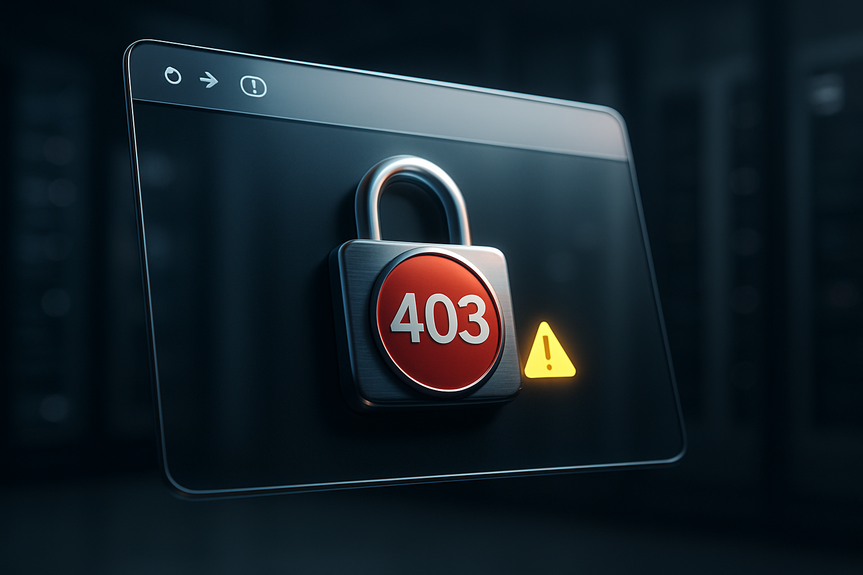
A 403 means the server understands your request but will not let you in. It often happens due to wrong permissions, a blocked IP, missing index files, or strict security rules. The good news: you can often fix it in minutes if you follow a clear checklist.
Confirm the URL is correct. Watch for extra slashes or wrong file names.
Log in if the page needs an account. Private pages deny guests.
Refresh the page. Then clear your browser cache and cookies.
Try Incognito/Private mode or a different browser.
Turn off VPN or proxy. Some sites block those IPs.
Test another network (mobile hotspot vs. Wi‑Fi) to rule out IP blocks.
Wait and retry later. The site may be rate limiting.
Contact the site owner and share the exact URL and time.
Remove tracking parameters from the URL and try again.
Folders: 755
Files: 644
Apply these from your hosting file manager or SSH. Do not set 777. After you change them, test again. These steps often show how to fix 403 error caused by permission errors.
Back up .htaccess.
Temporarily rename it to .htaccess.bak.
Reload the site. If it works, the rules were the problem.
Regenerate default rules (in WordPress: Settings > Permalinks > Save).
Add custom rules back one by one, testing each time.
Make sure index.html or index.php exists in the right folder.
Adjust DirectoryIndex rules if you use a different name.
Look for “Deny from” or “Require all denied” in .htaccess or server config.
Disable hotlink protection to test. Misconfigured patterns can block your own images or pages.
Check mod_security or similar modules for false positives.
Disable recent plugins or security tools. Re‑enable one at a time.
Switch to a default theme to rule out theme rules.
Verify file ownership (the same user/group as the web server).
If you still need help with how to fix 403 error in WordPress, your hosting support can reset permissions and scan logs for you.
In Cloudflare or your CDN, put the site in “development mode” or pause proxying.
Test your origin directly. If it works, the CDN/WAF rule is the cause.
Review WAF events and turn off rules that block good traffic.
Allowlist your admin IP.
Remove country blocks if they include your visitors.
Reduce bot fight or challenge levels if they create false blocks.
Verify A/AAAA/CNAME records in your DNS dashboard.
Clear local DNS cache or wait for propagation after changes.
Ensure the SSL certificate matches your domain and subdomains.
Avoid mixed HTTP/HTTPS rules that create blocked hops.
Use one redirect path (HTTP to HTTPS at either CDN or origin, not both).
Check web server logs around the time of the 403.
Find the request path, status code, referrer, and user agent.
Match the log line to a rule (WAF, .htaccess, plugin) and adjust it.
When you tie the 403 to a rule, you learn exactly how to fix 403 error for that path.
Keep a backup of your .htaccess and server configs.
Use staging for plugin updates and test before going live.
Apply least-privilege file permissions by default.
Document firewall and CDN rule changes.
Monitor logs and set alerts for spikes in 403s.
Fast access recovery comes from a simple order: test the browser, test the network, then test the server rules. If nothing works, call your host with timestamps and log entries. Now you know how to fix 403 error and keep your site open to the right people.
What “403 Forbidden” Means
A 403 shows when the server denies access on purpose. It can be the right response if a page is private. It can also be a mistake after an update, a rule change, or a bad link. You need to confirm whether you should have access, then adjust the settings that control it.How to Fix 403 Error: Quick Wins
Start with simple checks
If you are just visiting
File and Folder Fixes for Site Owners
Reset permissions
Wrong file permissions trigger blocks. Typical safe values:Restore or rebuild .htaccess
On Apache, a broken .htaccess can deny everyone.Check index files
If a folder has no index file and directory listing is off, the server may return 403.Review deny rules and hotlink protections
CMS and plugin checks
CDN, Proxy, and Firewall Steps
Pause CDN to isolate the issue
Check WAF and rate limits
DNS, SSL, and Redirects
Confirm DNS points to the right server
Fix SSL and redirect loops
Use Logs to Find the Exact Block
Read access and error logs
Prevent It From Happening Again
(Source: https://www.inquirer.com/education/haverford-school-district-ai-tools-classes-20260627.html)
For more news: Click Here
FAQ
Q: What does a “403 Forbidden” error mean?
A: A 403 means the server understands your request but will not let you in. It can be returned intentionally for private pages or accidentally after an update, wrong permissions, a blocked IP, a missing index file, or strict security rules.
Q: What quick steps should I try as a visitor to restore access?
A: Start by confirming the URL and logging in if the page requires an account, then refresh and clear your browser cache and cookies. Try Incognito or a different browser, disable VPN or proxy, or test another network to rule out IP blocks.
Q: How do I fix file permissions to resolve a 403?
A: Wrong file permissions trigger 403 errors; typical safe values are folders 755 and files 644. Apply these from your hosting file manager or via SSH, do not set 777, and test the site again.
Q: Can a broken .htaccess cause a 403 and how do I test it?
A: A broken .htaccess can deny everyone; back up the file and temporarily rename it to .htaccess.bak, then reload the site to see if the rules were the problem. If it works, regenerate default rules (in WordPress: Settings > Permalinks > Save) and add custom rules back one by one, testing each time.
Q: How can CDN or WAF settings lead to a 403 and what should I check?
A: Pause your CDN or put the site in development mode and test the origin directly to see if the CDN or WAF is blocking requests. Review WAF events, allowlist your admin IP, remove country blocks, and reduce bot fight or challenge levels to identify and fix blocking rules.
Q: Why would a missing index file return a 403 and how do I fix it?
A: If a folder has no index file and directory listing is off, the server may return a 403. Make sure index.html or index.php exists in the right folder or adjust DirectoryIndex rules if you use a different name.
Q: What CMS or plugin checks can help identify a 403 caused by software?
A: Disable recent plugins or security tools and re-enable them one at a time, and switch to a default theme to rule out theme rules. Verify file ownership matches the web server user, and if you still need help with how to fix 403 error in WordPress contact your hosting support to reset permissions and scan logs for you.
Q: How can server logs help me find the exact cause of a 403 and what should I report to my host?
A: Check access and error logs for the request path, status code, referrer, and user agent around the time of the 403, then match that log line to a rule such as a WAF rule or .htaccess entry. When you tie the 403 to a rule you learn exactly how to fix 403 error for that path, and if nothing works call your host with timestamps and the relevant log entries.
Contents