AI News
26 Sep 2026
Read 9 min
How to master AI legal brief drafting for litigators
Build defensible Westlaw briefs faster with AI verifying citations, cutting review time.
AI legal brief drafting for litigators: what makes it defensible
Generic writing tools create text first and worry about sources later. That is risky in court. A purpose-built legal system begins with trusted content from Westlaw, KeyCite, and Practical Law. It reasons from real authority and shows you why each point belongs in your brief.
- Grounded research: Cases, statutes, and guidance come from Westlaw, not the open web.
- Attorney control: The system suggests; you select the arguments and the authority.
- Traceable support: Every proposition links back to the source so you can check it fast.
From intake to first draft: a guided workflow
1) Analyze your documents
Upload the pleadings, motions, and exhibits. Answer a few questions about your goal and venue. The tool summarizes the record so you can confirm what matters most before any drafting begins.
2) Pick the best arguments
Deep research agents scan Westlaw for possible arguments tied to your facts. Each option shows supporting law and which claims it targets. You decide which to advance and which to drop.
3) Develop with deeper research
For each chosen point, the system builds out reasoning with primary law, pin cites, and analysis. It draws on Westlaw Advantage, your uploaded documents, and Practical Law drafting know-how.
4) Produce a ready-to-edit draft
You receive a formatted document with a table of contents, a table of authorities, and citations to the record. It looks like a brief, not a rough outline, so you can focus on tone and strategy.
- Arguments organized by issue
- Record cites mapped to exhibits and page/line
- Local rules and common formatting baked in
Verification that catches problems early
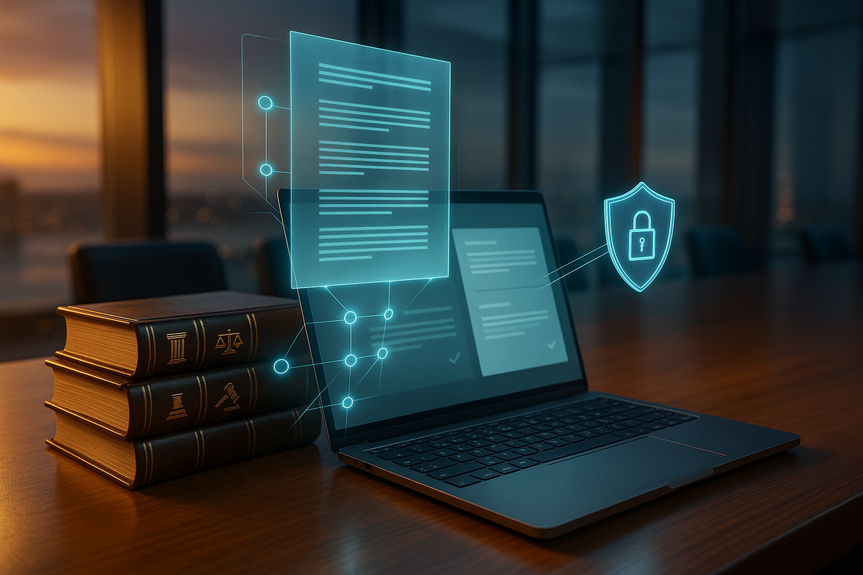
With AI legal brief drafting for litigators, verification is part of the workflow, not an afterthought. Before anything goes to a partner or the court, the system steps through each argument and its sources side by side.
- Existence check: Confirms the case or statute is real and current.
- Citation format: Fixes formatting and pin cites.
- Substance match: Tests whether the holding supports your proposition.
- Quote check: Compares quoted text to the source line by line.
- Negative treatment: Surfaces KeyCite warnings and limits on authority.
You make the final call every time. The software surfaces the authority and any red flags; you confirm, revise, or replace.
Why Fiduciary-Grade AI sets the bar
Litigation work carries duties of care and strict privacy needs. That is why defensible drafting needs Fiduciary-Grade AI. Built on Thomson Reuters infrastructure, the environment is encrypted, enterprise-secure, and designed so you can trace every output to its source.
- Domain-specific content: Westlaw, KeyCite, and Practical Law form the knowledge base.
- Data protection: Your documents are not used to train models.
- Auditability: Citations and quotes link back for instant verification.
The result is speed without guesswork, and automation without losing professional judgment.
Work faster without giving up defensibility
Practical tips for daily use
- Define the motion and the relief you seek before upload.
- Feed clean, labeled PDFs so record cites land in the right place.
- Prioritize two or three winning arguments; park the rest.
- Use the develop step to demand pin cites and strong parentheticals.
- Run verification after each major change, not just at the end.
- Adopt Practical Law templates to match tone and structure for your court.
- Keep your voice: edit for clarity, concede weak ground, and sharpen the ask.
What this means for your team
Associates get to a credible draft faster. Partners spend review time on strategy, not citation cleanup. Clients see fewer hours spent on mechanical tasks and more on winning the core issues. Most important, your brief arrives on time and ready to defend.
When deadlines tighten, you need a system that starts from the law, proves every claim, and keeps you in control. Done right, AI legal brief drafting for litigators delivers a fast, accurate, and verifiable draft that you can sign with confidence.
(Source: https://legal.thomsonreuters.com/blog/purpose-built-fiduciary-grade-ai-drafts-defensible-briefs/)
For more news: Click Here
FAQ
Contents