Crypto
19 Mar 2026
Read 12 min
XRP five-year price forecast Discover whether to hold *
XRP five-year price forecast explains why Ripple's stablecoin pivot could cap token gains for holders.
The XRP five-year price forecast hinges less on ETFs and court wins and more on product design. Ripple’s banking network mostly uses tech that doesn’t need XRP, while its new RLUSD stablecoin can replace XRP as a bridge asset. That tilt points to underperformance unless utility grows.
XRP is down more than 60% from last summer’s high near $3.65, trading around $1.38 even after the SEC case ended and the Canary XRP ETF launched. At the same time, Ripple the company looks stronger than ever. RLUSD, its dollar-backed stablecoin, has topped $1.6 billion in value. Ripple bought over $2 billion in businesses, including a prime brokerage that clears more than $3 trillion each year. It also won a national trust bank charter. More people own crypto than ever, according to Motley Fool Research. So why hasn’t price followed?
The core answer: most enterprise activity around Ripple does not need the token. And where XRP does appear, its role is short-lived and easy to swap for a stablecoin. That creates weak, fleeting demand. Here is how those moving parts shape the road ahead.
XRP five-year price forecast: What matters most
Product-market fit, not headlines, drives demand
Ripple offers two main lines, long known as RippleNet and On-Demand Liquidity (ODL). RippleNet speeds up cross-border settlement, but it works as a secure messaging and reconciliation layer. Banks like Bank of America and Santander use it without ever touching XRP. This is where most of Ripple’s 300-plus partners sit today. ODL is different. It uses XRP as a bridge asset to hop from one currency to another. But ODL mostly serves smaller players, like fintechs and remittance firms, not the largest global banks. Volumes are lower than RippleNet. And importantly, institutions convert in and out of XRP within seconds. Every buy is matched by a near-instant sell. That pattern adds throughput but does not build lasting holding demand. Put simply, headline adoption of Ripple’s rails does not equal sticky demand for XRP. For a constructive XRP five-year price forecast, long-duration usage must grow, or a new use case must emerge that needs holders, not just pass-through liquidity.The stablecoin pivot changes the bridge
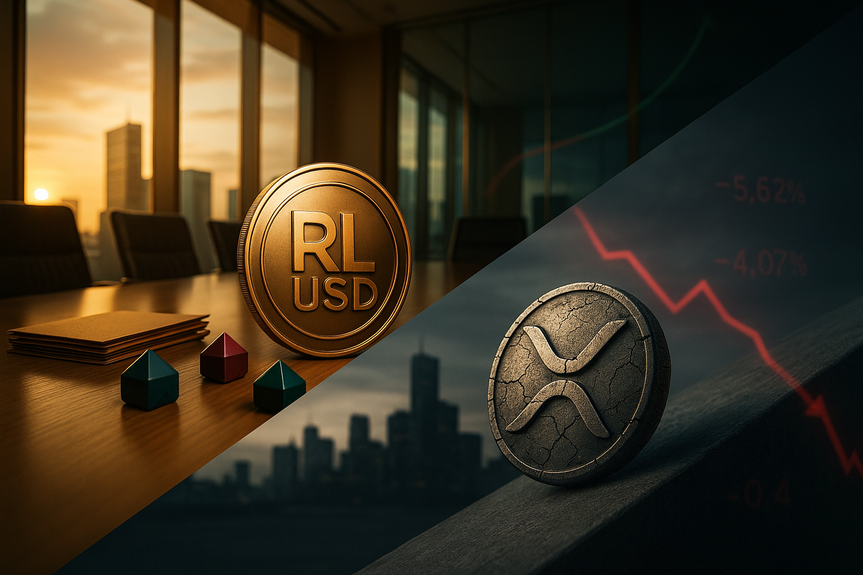
Ripple is now leaning hard into stablecoins. It spent about $200 million to acquire Rail, a stablecoin payments platform. The company now leads with “integrate stablecoin payments into your business” on its site. RLUSD can act as the bridge asset that ODL once filled with XRP. It moves with speed but avoids volatility. For banks, speed plus stability often beats speed plus risk. That is a problem for token demand. If RLUSD handles most flows, XRP’s role shrinks. Even if cross-border traffic doubles or triples, the token may not capture that growth if a stablecoin carries the load. The rails can thrive while the token treads water.Ripple’s rails vs. XRP the token
Why banks chose messaging first
Banks seek reliability, compliance, and cost control. RippleNet checks those boxes. It standardizes messaging, improves visibility, and reduces errors. Because it focuses on coordination rather than currency exposure, banks can adopt it without changing treasury policies or market-risk limits. That path-of-least-resistance adoption explains why hundreds of partners use Ripple tech while XRP demand stays muted.Why ODL doesn’t create durable buy pressure
ODL’s design is elegant for fast transfers. Market makers buy XRP in one currency, then sell it in the destination currency seconds later. This keeps payments moving but leaves no one holding the bag. Without incentives to hold — yield, fee rebates, or structural sinks — the token behaves like a transient tool. That means price depends on deeper factors: conviction buyers, new utilities, or scarce supply dynamics. Today, ODL alone does not deliver that.The stablecoin effect and what could flip the script
RLUSD is the default bridge for cautious institutions
A dollar-backed token like RLUSD offers the same speed ODL aims for with far less price swing. That reduces slippage risk and accounting headaches. In practice:- Settlement speed: similar
- Volatility: far lower with RLUSD
- Operational fit: easier for bank risk teams
What would need to happen for a stronger outlook
There are still ways the story could change:- Large banks use XRP directly: If Tier 1 banks adopt XRP at scale for cross-border flows, it could lift sustained demand.
- Incentives to hold: New token economics that reward holding (for example, fee offsets or built-in utility that requires balances) could cut churn.
- New use cases: If XRP becomes central to a high-frequency, non-bridge service that needs persistent inventory, demand could deepen.
- Policy shifts: Rules that limit stablecoin use across borders could push institutions toward non-stablecoin bridges.
ETFs, adoption, and the demand disconnect
Why the ETF pop faded
Spot XRP ETFs, like the Canary XRP ETF, gave investors an easier way to get exposure. But access alone does not create utility. After brief excitement, price drifted back to levels seen before the SEC resolution. That suggests the market priced in convenience but did not see a reason to ascribe higher long-term cash-flow-like value to the token.More crypto owners, same utility puzzle
Yes, more people own crypto today. That can support liquidity and interest. But if new owners are buying for short-term moves, not for network usage, their impact fades. Long-term price tends to follow real demand from real use. For XRP, that still comes down to whether institutions will hold it, not just touch it in transit.How to think about positioning
What to watch on the road ahead
If you hold or track the token, these signals matter:- RippleNet disclosures that specify XRP usage, not just generic “Ripple technology” mentions
- ODL volume growth from large banks, not only fintechs or remittance firms
- Clear product incentives that reward holding XRP within enterprise workflows
- Relative growth of RLUSD volumes vs. XRP-based corridors
- ETF net inflows that persist beyond initial launch spikes
Risk and reward framing
Today’s setup looks asymmetric. Ripple’s business momentum is strong, but that strength routes chiefly through products that do not require the token. The downside risk is that XRP continues to lag broad crypto benchmarks if RLUSD and bank-friendly rails keep compounding. The upside path needs explicit, public commitment from large institutions to use and hold XRP, and product designs that make holding valuable. In the end, XRP’s fate is less about lawsuits or new listings and more about the plumbing of payments. If a stablecoin can do the same job with less risk, most institutions will choose it. That is why, absent a design or policy shift, this XRP five-year price forecast leans cautious. Ripple may thrive as a payments firm, while the token fights to keep up. In five years, Ripple could be even more entrenched: a bank-chartered operator with a growing stablecoin and deeper enterprise ties. But unless XRP becomes essential to those rails, the XRP five-year price forecast suggests underperformance versus the broader crypto market. (Source: https://www.fool.com/investing/2026/03/17/where-will-the-cryptocurrency-xrp-be-in-5-years/) For more news: Click HereFAQ
Q: What does the XRP five-year price forecast suggest about the token’s prospects?
A: The article’s forecast leans cautious because Ripple’s payments rails often don’t require XRP and its new RLUSD stablecoin can replace XRP as a bridge asset. Unless XRP gains long-duration utility or new incentives to hold emerge, the token may underperform broader crypto markets.
Q: How does RippleNet differ from On-Demand Liquidity (ODL), and why does that matter for XRP demand?
A: RippleNet is a settlement and messaging layer that banks use without touching XRP, while ODL uses XRP as a bridge asset but primarily serves smaller fintechs and remittance providers. Because ODL flows are converted in and out within seconds, each buy is matched by an immediate sell, which limits lasting demand for the token.
Q: What is RLUSD and how could it impact XRP’s future price?
A: RLUSD is Ripple’s dollar-backed stablecoin that has crossed about $1.6 billion in market capitalization and can act as a bridge asset with similar speed but far less volatility. If institutions favor RLUSD for its price stability, it could absorb flows that otherwise might have used XRP and pressure the token’s price.
Q: Why didn’t the SEC case resolution and spot XRP ETFs trigger lasting price gains?
A: The article notes that XRP briefly rallied after the SEC case ended and spot ETFs like the Canary XRP ETF launched, but the price drifted back to pre-resolution levels. This suggests easier access via ETFs added convenience without creating new long-term utility that would sustain higher prices.
Q: What would need to change for a more positive XRP five-year price forecast?
A: A more constructive outlook would require large banks to use and hold XRP at scale, token economics that incentivize holding, new persistent use cases that require inventory, or policy shifts that limit stablecoin use across borders. Any two or three of these changes could materially alter the forecast from cautious to more optimistic.
Q: Which metrics or disclosures should investors watch to assess XRP’s medium-term prospects?
A: Investors should watch RippleNet disclosures that explicitly reference XRP usage, ODL volume growth from large banks rather than only fintechs, and relative volumes for RLUSD versus XRP corridors. Persistent ETF net inflows and clear product incentives that reward holding XRP are also important signals.
Q: Can Ripple’s corporate strength translate into higher XRP prices?
A: Ripple’s business momentum is strong with a bank charter, sizable acquisitions, and hundreds of institutional partnerships, but most of that activity routes through products that don’t require the token. As a result, the company could thrive while XRP struggles if stablecoins and bank-friendly rails continue to capture flows.
Q: What are the main risks and potential rewards for holding XRP now?
A: The main risk is that XRP continues to lag broader crypto benchmarks as RLUSD and other stablecoins handle cross-border flows, reducing durable token demand. The potential reward would come only if large institutions begin holding XRP, product designs create incentives to hold, or new use cases emerge that require persistent token inventory.
* The information provided on this website is based solely on my personal experience, research and technical knowledge. This content should not be construed as investment advice or a recommendation. Any investment decision must be made on the basis of your own independent judgement.
Contents